


 English
 русский

Content
- 1 What Is Stainless Steel Strip and How Is It Produced?
- 2 Common Grades of Stainless Steel Strip and Their Properties
- 3 Surface Finishes Available for Stainless Steel Strip
- 4 Key Dimensional Tolerances and Why They Matter
- 5 Major Industrial Applications of Stainless Steel Strip
- 6 How to Select the Right Stainless Steel Strip for Your Application
- 7 Storage, Handling, and Contamination Prevention
What Is Stainless Steel Strip and How Is It Produced?
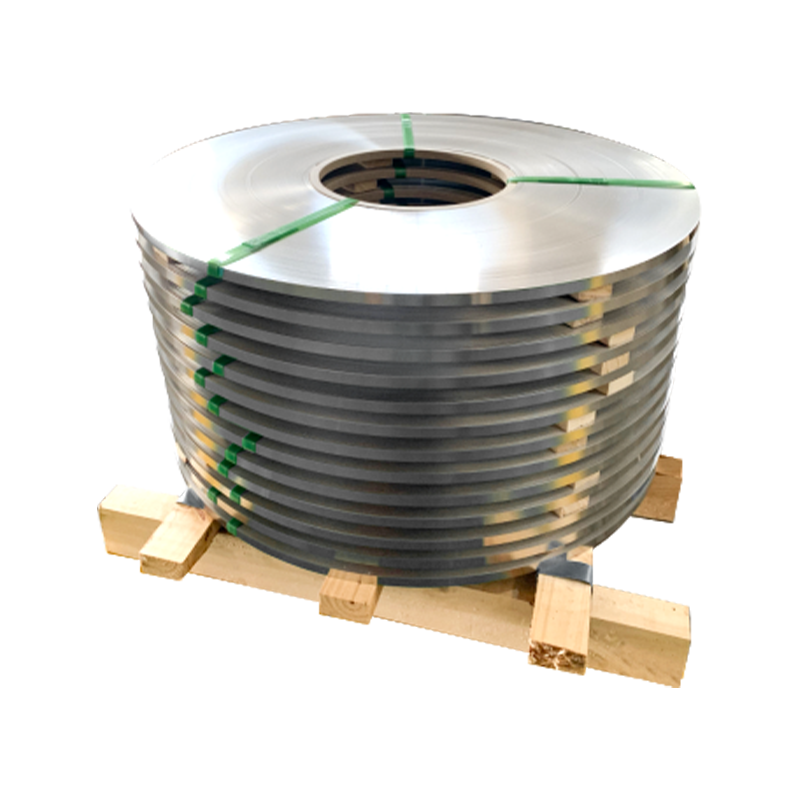
Stainless steel strip is a flat-rolled stainless steel product characterized by its narrow width — typically ranging from 6mm to 650mm — and its relatively thin thickness, generally between 0.05mm and 3.0mm. It is produced by cold rolling hot-rolled stainless steel coils through a series of precision rolling mills that progressively reduce the material to the target thickness while improving surface quality, dimensional accuracy, and mechanical properties. The cold rolling process work-hardens the steel, increasing tensile strength while reducing ductility, which is why many stainless steel strips undergo subsequent annealing and pickling to restore a balance of strength and formability suited to downstream fabrication.
The production process for stainless steel strip is considerably more demanding than that for carbon steel strip due to stainless steel's higher work hardening rate and greater rolling resistance. After cold rolling, the strip passes through a continuous annealing furnace where it is heated to temperatures between 1000°C and 1150°C (depending on the grade) and then rapidly quenched to dissolve carbides and restore the austenitic or ferritic microstructure. Pickling in a mixed nitric-hydrofluoric acid bath follows to remove the oxide scale formed during annealing, leaving a clean, passive surface ready for further processing or final delivery. The finished strip is either slit to precise widths from master coils or supplied in the full-width coil form, depending on customer requirements.
Common Grades of Stainless Steel Strip and Their Properties
Grade selection is one of the most critical decisions when specifying stainless steel strip, as each grade offers a specific combination of corrosion resistance, mechanical strength, magnetic response, and workability. The wrong grade choice can result in premature corrosion, forming failures, or unnecessary cost. Below is an overview of the most widely used grades in strip form.
| Grade | Type | Key Properties | Typical Applications |
| 304 / 304L | Austenitic | Excellent corrosion resistance, non-magnetic, highly formable | Food processing, architecture, general fabrication |
| 316 / 316L | Austenitic | Superior resistance to chlorides and acids, molybdenum-enhanced | Marine, pharmaceutical, chemical processing |
| 430 | Ferritic | Magnetic, lower cost, good oxidation resistance | Automotive trim, appliances, kitchen equipment |
| 201 | Austenitic | Manganese replaces nickel, lower cost, good formability | Utensils, decorative panels, budget fabrications |
| 301 | Austenitic | High work hardening rate, excellent spring properties | Springs, clips, fasteners, railway cars |
| 420 | Martensitic | Hardenable, high hardness after heat treatment, magnetic | Blades, surgical instruments, cutting tools |
| 17-7PH | Precipitation Hardening | Very high strength, good corrosion resistance | Aerospace components, high-stress springs |
Among all grades, 304 and 316 stainless steel strips dominate global consumption due to their well-rounded performance profile. The "L" designation (304L, 316L) indicates an extra-low carbon content of 0.03% maximum, which is important for applications involving welding, as it eliminates the risk of sensitization — the precipitation of chromium carbides at grain boundaries that reduces corrosion resistance in the heat-affected zone. When in doubt between standard and "L" grades for welded assemblies, the "L" variant is always the safer choice.
Surface Finishes Available for Stainless Steel Strip
The surface finish of stainless steel strip profoundly affects its appearance, corrosion performance, cleanability, and suitability for specific forming or coating operations. Stainless steel strip is available in a range of standardized finishes, each produced through different combinations of rolling, annealing, pickling, and mechanical or electrochemical polishing.
Mill Finishes (No. 1 and No. 2D / 2B)
No. 1 finish is a hot-rolled, annealed, and pickled surface with a dull, rough appearance. It is rarely used in visible applications but is economical for structural or heat-resistant parts where aesthetics are irrelevant. No. 2D is a cold-rolled, annealed, and pickled finish with a dull matte surface, used primarily as a base for further processing. No. 2B is the most widely used cold-rolled finish — it passes through polishing rolls after annealing and pickling to produce a smooth, slightly reflective surface that serves as the standard base for most industrial and commercial stainless steel strip applications.
Bright Annealed Finish (No. 2BA / BA)
Bright annealed (BA) finish is produced by annealing the cold-rolled strip in a controlled hydrogen or nitrogen atmosphere furnace that prevents surface oxidation, eliminating the need for pickling. The result is a highly reflective, mirror-like surface with excellent corrosion resistance, as the passive chromium oxide layer forms uniformly without acid-induced surface roughening. BA finish is the preferred choice for food contact equipment, pharmaceutical manufacturing, and decorative applications where a premium appearance and maximum hygiene are required.
Polished and Specialty Finishes (No. 3, No. 4, No. 8, and Embossed)
No. 3 and No. 4 finishes are produced by mechanical abrasive polishing and are characterized by unidirectional grain lines. No. 4 is the standard "brushed" finish seen on kitchen appliances and elevator panels, offering an attractive appearance that effectively conceals minor scratches over time. No. 8 finish (mirror polish) is achieved through progressive polishing with finer and finer abrasives followed by buffing, producing a near-perfect reflective surface used in decorative architecture, jewelry findings, and optical components. Embossed stainless steel strip is produced by passing the strip through engraved rolls to impart a repeating textured pattern that improves grip, aesthetics, and rigidity in thin-gauge applications.
Key Dimensional Tolerances and Why They Matter
Dimensional precision is one of the defining characteristics that differentiates precision cold-rolled stainless steel strip from standard sheet or plate products. In many industries — particularly electronics, medical devices, and precision springs — the tolerances on thickness, width, flatness, and edge condition are as technically important as the material grade or surface finish. Understanding these tolerances helps engineers and procurement teams specify the correct product class and avoid costly rework or fit issues during assembly.
- Thickness tolerance: For precision cold-rolled strip, thickness tolerances can be as tight as ±0.002mm on ultra-thin gauges below 0.1mm. Standard commercial tolerances for thicker strip (0.5mm to 3.0mm) typically fall within ±0.02mm to ±0.05mm, depending on width and grade. Always confirm whether the tolerance applies to a single measurement point or to the full cross-sectional profile (crown and wedge control).
- Width tolerance: Slit-edge strip produced by rotary slitting can achieve width tolerances of ±0.05mm to ±0.15mm depending on the gauge and slitting equipment used. Mill-edge strip (as-rolled without slitting) carries wider tolerances and a slightly rounded edge profile, making it suitable for applications where edge condition is less critical.
- Flatness and camber: Flatness is measured as the maximum deviation from a flat reference plane across the strip width. Camber refers to the lateral curvature of the strip along its length. For precision stamping and progressive die operations, flatness deviations exceeding 2mm per meter and camber exceeding 1mm per meter can cause misfeeds and dimensional inconsistencies in the finished parts.
- Edge condition: Stainless steel strip is available with mill edge (natural rolling edge), slit edge (sheared by rotary blades with a slight burr), deburred edge (burr removed by abrasive or electrochemical methods), and round edge (fully radiused for safe handling). The edge type must be matched to the end application — gasket material and medical strip, for example, require burr-free or round edges to prevent injury and dimensional interference.
Major Industrial Applications of Stainless Steel Strip
The combination of corrosion resistance, mechanical strength, formability, and hygienic surface properties makes stainless steel strip indispensable across a remarkably diverse range of industries. Its ability to be precision-rolled to very thin gauges without losing strength or surface quality opens up applications that no other metal can easily serve.
Precision Springs and Elastic Components
Grade 301 and 17-7PH stainless steel strips are the dominant materials for precision flat springs, retaining clips, snap fasteners, and constant-force spring components. These grades exhibit exceptionally high work hardening rates during cold rolling, allowing the finished strip to achieve tensile strengths exceeding 1300 MPa without heat treatment — rivaling many alloy steel spring materials while offering far superior corrosion resistance. Precision strip for spring applications is specified with tight thickness tolerances (often ±0.005mm), controlled hardness ranges, and certified flatness to ensure consistent spring rates in automated assembly operations.
Food Processing and Pharmaceutical Equipment
Grade 304 and 316L stainless steel strips are the backbone of hygienic process equipment manufacturing. Conveyor belts, flexible chutes, perforated filter screens, banding straps for sterile packaging machines, and flexible hose inner liners are all fabricated from stainless steel strip. The smooth, non-porous BA or No. 4 surface finishes resist bacterial adhesion, withstand aggressive cleaning-in-place (CIP) chemical cycles, and comply with FDA and EU food contact regulations. In pharmaceutical applications, 316L strip is specified for its superior resistance to the chloride-containing cleaning agents and sterilization solutions commonly used in drug manufacturing environments.
Automotive and Exhaust Systems
The automotive industry is one of the largest consumers of stainless steel strip globally. Ferritic grades 409 and 441 are used extensively for exhaust system components — including flexible couplings, bellows, catalytic converter substrates, and exhaust gas recirculation (EGR) components — because they offer excellent high-temperature oxidation resistance at lower cost than austenitic grades. Grade 301 full-hard strip is used for structural reinforcement strips in doors and bumpers. Decorative trim applications use polished 304 or 430 strip to provide lasting shine without the corrosion issues associated with chrome-plated steel alternatives.
Electronics and Precision Fabrication
Ultra-thin stainless steel strip in gauges as fine as 0.02mm is used in electronics for shielding components, flexible printed circuit board substrates, battery contact springs, and precision-stamped lead frames. Grade 304 and 316 strips at these thicknesses require the highest levels of rolling precision, surface cleanliness, and flatness control, as even microscopic surface defects or thickness variations can cause failures in high-density electronic assemblies. The non-magnetic properties of austenitic stainless steel strip are particularly valuable in electronics applications where magnetic interference would compromise device performance.
How to Select the Right Stainless Steel Strip for Your Application
Selecting the correct stainless steel strip involves evaluating multiple parameters simultaneously rather than focusing on a single characteristic. A systematic approach to specification avoids over-engineering (and over-spending) or selecting an inadequate material that fails prematurely in service.
- Define the corrosion environment first: Identify all chemical agents, temperatures, and concentrations that the strip will be exposed to. For mild atmospheric environments, 304 is sufficient. For chloride-rich environments (coastal, marine, or chemical), upgrade to 316L. For highly acidic or oxidizing environments, consider duplex grades or higher-alloy materials.
- Determine the required mechanical properties: If high strength and spring-back are critical (springs, clips), select 301 or 17-7PH in appropriate tempers. If formability and deep drawing are priorities, select 304 or 316 in the annealed condition. For high-temperature strength, consider 310 or 321 grades.
- Specify the surface finish based on function: For hygienic applications, specify BA or No. 4 minimum. For structural or hidden applications, 2B is cost-effective. For decorative applications, No. 4 or No. 8 polished finishes deliver the required appearance.
- Confirm dimensional requirements with your fabrication process: If progressive stamping or roll forming is involved, verify that the strip thickness tolerance, flatness, and coil set specifications are compatible with your tooling and feeder system. Excessive coil set (curvature in the rolling direction) is a common problem with precision strip that causes misfeed in automatic stamping presses.
- Request full material certification: Always require a mill test certificate (MTC) in accordance with EN 10204 3.1 or 3.2 that documents the chemical composition, mechanical test results, heat number, and relevant standard compliance. This is not only good engineering practice but is mandatory for pressure equipment, medical devices, and food contact applications under most international regulatory frameworks.
Storage, Handling, and Contamination Prevention
Even the highest-quality stainless steel strip can develop rust staining or surface damage if improperly stored or handled. Stainless steel's corrosion resistance depends entirely on the integrity of its thin chromium oxide passive layer, which can be compromised by contamination with carbon steel particles, chloride deposits, or mechanical damage. Store stainless steel strip coils and slit coils on wooden or coated metal racks that prevent contact with carbon steel surfaces. Cover stored coils with polyethylene film to prevent airborne chloride and moisture deposition, particularly in coastal or industrial environments. During handling, use nylon or rubber-coated lifting straps and gloves — bare wire rope or steel chains will leave embedded iron particles that cause rust spots on the stainless surface within days. In the workshop, dedicate separate cutting, grinding, and forming tools exclusively to stainless steel work; using carbon steel-contaminated tooling is the single most common cause of rust spots appearing on stainless components shortly after fabrication. If surface contamination does occur, prompt treatment with a stainless steel passivation solution or citric acid-based cleaner will restore the passive layer and prevent further corrosion development.
 Previous


