


 English
 русский

Content
- 1 What 201 Stainless Steel Strips Are Made Of
- 2 How 201 Compares to 304 Stainless Steel
- 3 Comparing Key Properties of 201 and 304 Stainless Steel
- 4 Common Applications for 201 Stainless Steel Strips
- 5 Surface Finishes Available for 201 Stainless Steel Strips
- 6 Choosing the Right Thickness and Width for Your Application
- 7 Quality Checks to Perform Before Accepting a Shipment
What 201 Stainless Steel Strips Are Made Of
201 stainless steel is part of the austenitic family of stainless steels, but it differs from more common grades like 304 by replacing a large portion of its nickel content with manganese and nitrogen. A typical 201 strip contains roughly 16 to 18 percent chromium, 3.5 to 5.5 percent nickel, and 5.5 to 7.5 percent manganese, compared to 304 stainless steel, which usually contains 8 to 10.5 percent nickel and very little manganese. This substitution was originally developed to reduce dependence on nickel, which historically has been a more volatile and expensive raw material on global metal markets.
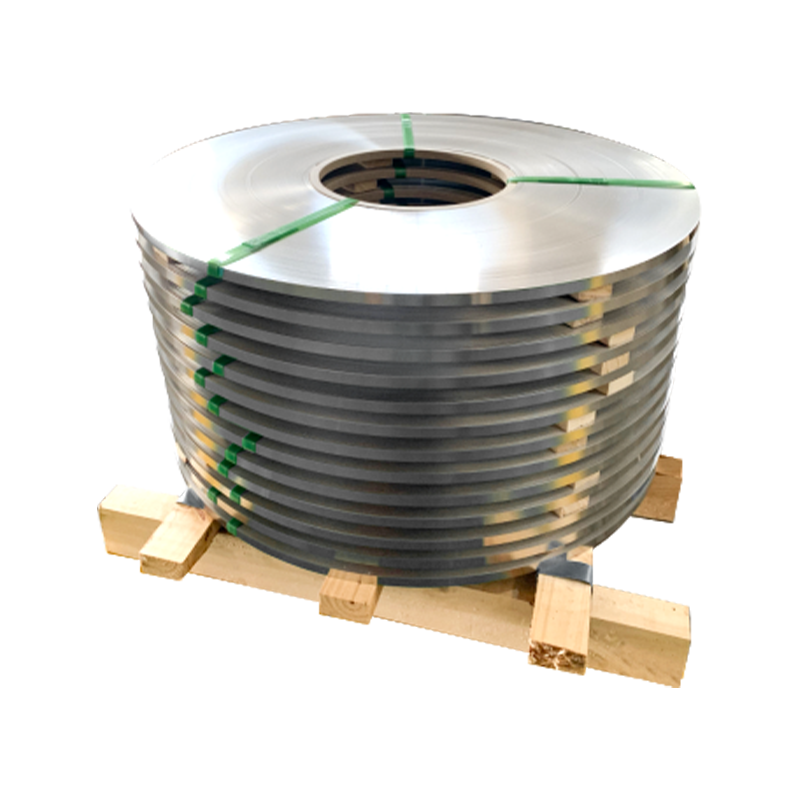
Because manganese and nitrogen still allow the material to maintain an austenitic crystal structure, 201 strips retain useful properties such as good formability and non-magnetic behavior in the annealed condition, even though the overall corrosion resistance is lower than nickel-rich grades. Strip form specifically refers to the flat-rolled product supplied in narrow widths and coiled lengths, typically used as a feedstock for further fabrication rather than as a finished structural product on its own.
How 201 Compares to 304 Stainless Steel
The most common question buyers ask when sourcing 201 strips is how the material actually performs against the more widely known 304 grade. The honest answer depends heavily on the application, since 201 is not simply a cheaper substitute that performs identically in every scenario.
Strength and Hardness
201 stainless steel generally has higher tensile strength and hardness than 304 in the annealed condition, largely due to its nitrogen content. This makes it a reasonable choice for applications where mechanical strength matters more than long-term corrosion exposure, such as certain structural trim pieces, kitchen equipment frames, or decorative architectural components that are not constantly exposed to moisture or chemicals.
Corrosion Resistance
304 stainless steel outperforms 201 in resistance to pitting, staining, and general atmospheric corrosion because of its higher nickel and lower manganese content. In humid or coastal environments, or in any application involving regular contact with food acids, cleaning chemicals, or salt, 304 remains the more reliable choice. 201 strips are better suited to indoor, low-moisture, or decorative uses where appearance and cost matter more than long-term resistance to rust and staining.
Comparing Key Properties of 201 and 304 Stainless Steel
| Property | 201 Stainless Steel | 304 Stainless Steel |
| Nickel Content | 3.5% to 5.5% | 8% to 10.5% |
| Manganese Content | 5.5% to 7.5% | Under 2% |
| Tensile Strength | Higher | Moderate |
| Corrosion Resistance | Lower | Higher |
| Relative Cost | Lower | Higher |
Common Applications for 201 Stainless Steel Strips
201 strips are widely used in manufacturing environments where cost control matters as much as material performance, particularly for products that are not constantly exposed to harsh moisture or chemical conditions. Some of the most frequent uses include kitchen utensil components, decorative trim for furniture and appliances, automotive trim pieces, and structural supports inside consumer electronics housings. The strip form is particularly useful for roll-forming and stamping processes, where the material is fed continuously through a press to create consistent shapes such as brackets, clips, or housings.
- Kitchen and food preparation tools that are not regularly exposed to salt or acidic cleaning agents.
- Decorative architectural trim used in indoor settings such as elevator panels and handrails.
- Automotive interior trim and clips where appearance and formability matter more than outdoor durability.
- Consumer electronics brackets and internal support structures that remain dry during normal use.
- Furniture hardware such as hinges, brackets, and decorative bands on indoor pieces.
Surface Finishes Available for 201 Stainless Steel Strips
The finish applied to a 201 strip affects both its appearance and how well it resists surface staining over time. A 2B finish, which is a smooth, moderately reflective mill finish achieved through cold rolling and light polishing, is the most common option for general fabrication work since it balances cost with a clean appearance. A No. 4 brushed finish, which has fine, directional polishing lines, is often chosen for visible decorative applications such as appliance panels or architectural trim where a satin look is preferred over a mirror shine.
Mirror, or No. 8, finishes are also available for 201 strips, though buyers should be aware that the lower corrosion resistance of 201 compared to 304 means a mirror finish on 201 may show fingerprints, water spots, or light surface staining more quickly in humid environments. For applications where a mirror finish is required and the part will see regular handling or moisture exposure, switching to 304 is often the more practical long-term decision despite the higher material cost.
Choosing the Right Thickness and Width for Your Application
201 stainless steel strips are typically supplied in thicknesses ranging from around 0.1 millimeters for thin decorative trim up to 3 millimeters for heavier structural brackets, with widths commonly available from 10 millimeters up to several hundred millimeters depending on the supplier's rolling capacity. Thinner strips, generally under 0.5 millimeters, are easier to form into tight bends and curves but offer less rigidity, making them better suited for decorative trim or lightweight housings. Thicker strips above 1 millimeter provide more structural support but require more force during stamping or bending, which means tooling needs to be matched to the material thickness to avoid cracking at bend lines.
Buyers should also confirm the strip's edge condition before ordering, since slit edges, which are cut directly from a wider coil, can have small burrs that need deburring before use in applications involving hand contact or tight tolerance assembly. Mill edge strips, which retain the original rounded edge from the rolling process, are generally smoother but less precise in width tolerance.
Quality Checks to Perform Before Accepting a Shipment
Verifying material quality before a shipment is used in production helps avoid costly rework later in the manufacturing process. A material test certificate, often called an MTC, should accompany every shipment and list the actual chemical composition and mechanical properties of that specific production batch rather than generic grade specifications. Buyers can also request a portable spectrometer reading or send a sample to an independent lab if there is any concern about whether the supplied strip actually matches the 201 specification, since mislabeling between 201 and lower-grade alternatives does occur in some supply chains.
Visual inspection should check for consistent surface finish across the coil, absence of rolling defects such as scratches or pitting, and uniform width along the entire length of the strip. A simple magnet test can also help confirm general grade behavior, since properly annealed 201 strip should show only weak magnetic response, while a strongly magnetic reading may indicate cold working effects or a different, lower-grade material entirely.
 Previous


