


 English
 русский

Content
- 1 What Is 304 Cold Rolled Stainless Steel Strip?
- 2 Why Cold Rolled Strip Is Preferred for Corrugated Pipe Manufacturing
- 3 Key Mechanical Properties for Corrugated Pipe Applications
- 4 Common Applications of Corrugated Stainless Steel Pipe
- 5 Selecting the Right Strip Thickness and Width
- 6 Sourcing Considerations for Manufacturers
What Is 304 Cold Rolled Stainless Steel Strip?
304 cold rolled stainless steel strip is a thin, precision-formed steel product made from austenitic 304 grade stainless steel, processed through cold rolling to achieve reduced thickness, improved surface finish, and enhanced mechanical properties compared to hot rolled variants. Cold rolling involves passing the steel through rollers at room temperature, which compresses the grain structure and results in a smoother, more dimensionally consistent strip well suited for further forming operations, including the corrugation process used in flexible metal piping.
304 grade stainless steel contains approximately 18% chromium and 8% nickel, giving the material strong corrosion resistance alongside good formability, both of which are essential when the strip will later be shaped into corrugated patterns for pipe manufacturing. The combination of thinness, strength, and flexibility achieved through cold rolling makes this material particularly suitable for applications requiring the strip to be bent repeatedly without cracking or losing structural integrity.
Why Cold Rolled Strip Is Preferred for Corrugated Pipe Manufacturing
Corrugated pipe production requires raw material that can withstand repeated bending and forming without fatigue failure, since the corrugation process introduces continuous ridges and grooves along the pipe's length to provide flexibility. Cold rolled 304 strip offers several characteristics that directly support this manufacturing process.
Consistent Thickness and Surface Finish
Cold rolling produces a strip with tighter thickness tolerances than hot rolled alternatives, which is critical for corrugated pipe applications since uneven thickness can lead to inconsistent forming during the corrugation process, potentially weakening certain sections of the finished pipe.
Improved Formability
The cold rolling process refines the grain structure of the steel, improving its ability to be bent into tight corrugation patterns without cracking. This formability is essential for producing flexible corrugated pipe that can bend around obstacles while maintaining structural integrity under pressure.
Enhanced Surface Quality
Cold rolled strip typically features a smoother surface finish compared to hot rolled steel, which not only improves the aesthetic appearance of the finished pipe but also reduces surface irregularities that could otherwise become initiation points for corrosion or fatigue cracking during repeated flexing.
Key Mechanical Properties for Corrugated Pipe Applications
Understanding the specific mechanical properties of 304 cold rolled strip helps manufacturers confirm the material meets performance requirements for their intended corrugated pipe application. The table below summarizes key characteristics relevant to this use case.
| Property | Relevance to Corrugated Pipe |
| Tensile Strength | Ensures pipe withstands internal pressure |
| Elongation | Allows repeated bending without cracking |
| Hardness | Balances flexibility with wear resistance |
| Surface Roughness | Affects fatigue resistance during flexing |
Manufacturers typically request mill certification documents confirming these properties fall within the ranges specified by relevant standards, such as ASTM A240, before incorporating the strip into production.
Common Applications of Corrugated Stainless Steel Pipe
Corrugated pipe manufactured from 304 cold rolled stainless steel strip serves a variety of industrial and residential purposes, largely due to its combination of flexibility and corrosion resistance. Common applications include:
- Gas supply lines requiring flexible routing around structural obstacles
- Flexible metal hose assemblies for industrial fluid transfer
- Exhaust and ventilation systems in automotive and HVAC equipment
- Cable and wire protection conduit in electrical installations
- Expansion joints in piping systems subject to thermal movement
In gas supply applications specifically, the corrosion resistance of 304 stainless steel plays a particularly important safety role, since it reduces the risk of leaks caused by material degradation over the pipe's service life.
Selecting the Right Strip Thickness and Width
Choosing appropriate strip dimensions is essential for ensuring compatibility with corrugation equipment and achieving the desired final pipe specifications. Thinner strips, generally in the range of 0.1mm to 0.3mm, are commonly used for smaller diameter flexible conduits, while thicker strips support larger diameter pipes requiring greater pressure resistance.
Strip width must also align precisely with the corrugation machine's forming rollers, so manufacturers should confirm exact width tolerances with their equipment specifications before placing bulk material orders. Working closely with strip suppliers who understand corrugated pipe production requirements can help avoid costly forming issues caused by dimensional mismatches.
Sourcing Considerations for Manufacturers
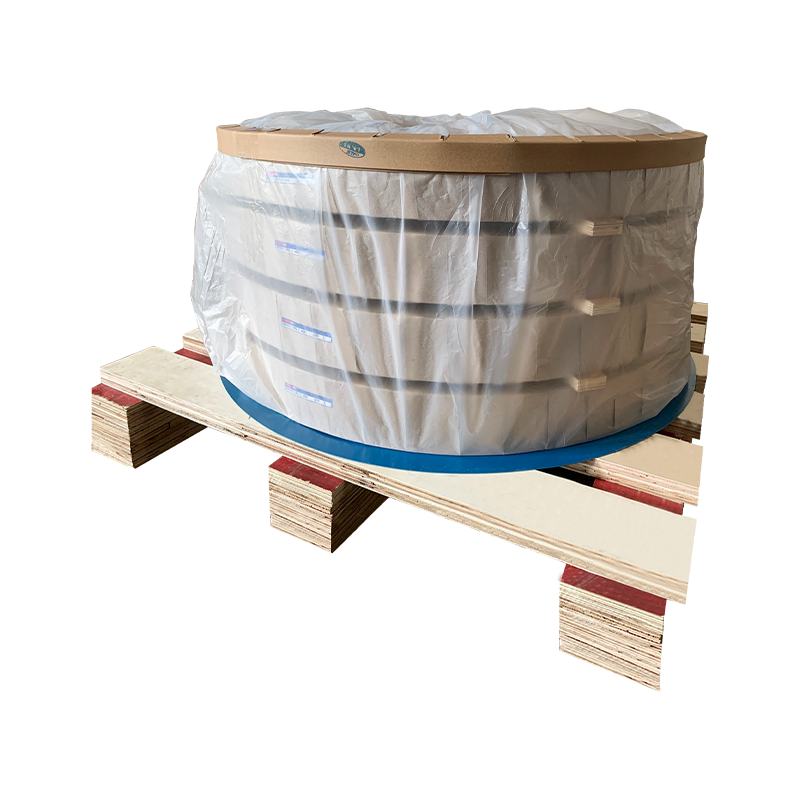
When sourcing 304 cold rolled stainless steel strip for corrugated pipe production, manufacturers should request detailed mill test certificates verifying chemical composition, mechanical properties, and surface finish grade. It is also worth confirming the coil packaging and handling procedures used by the supplier, since improper storage or transport can introduce surface scratches or edge damage that affect forming quality during the corrugation process.
For manufacturers running continuous production lines, establishing a reliable supply agreement with consistent lead times helps prevent production delays, particularly given that corrugated pipe manufacturing often requires steady, uninterrupted material flow to maintain forming line efficiency.
 Previous


