


 English
 русский

Content
"The material is fine on paper, but it fails in production." If you have specified stainless steel for deep drawing, stamping, or flexible metal components, you have probably heard that complaint. The usual problem is not poor steel; it is an incomplete understanding of the material properties for stainless steel in thin strip form. Tensile strength alone does not tell you how a grade will bend, spring, resist chlorides, or hold tolerances during high-volume forming. This guide explains the properties that matter most, how they connect to grade selection, and what you should check before buying cold-rolled stainless steel strip.
Chemical Composition Drives Performance
Stainless steel is an iron-chromium alloy with a minimum chromium content of 10.5%. Chromium creates a self-healing oxide film, but corrosion resistance is one element among many. Nickel stabilizes the austenitic structure and improves toughness; molybdenum increases resistance to pitting in chloride environments; carbon contributes to strength but can harm weldability; titanium and niobium consume carbon to prevent sensitization.
The table below shows typical composition ranges for stainless steel grades often supplied as precision strip. These values are reference points, not full specifications.
| Grade | Chromium (%) | Nickel (%) | Molybdenum (%) | Key Characteristic |
|---|---|---|---|---|
| 201 | 16.0-18.0 | 3.5-5.5 | - | Lower nickel, good formability |
| 301 | 16.0-18.0 | 6.0-8.0 | - | High work-hardening rate |
| 304 | 18.0-20.0 | 8.0-10.5 | - | General-purpose corrosion resistance |
| 304L | 18.0-20.0 | 8.0-12.0 | - | Lower carbon for better weldability |
| 316L | 16.0-18.0 | 10.0-14.0 | 2.0-3.0 | Higher pitting resistance in chlorides |
| 409L | 10.5-11.75 | 0.5 max | - | Ferritic, heat-resistant |
| 441 | 17.5-18.5 | 0.5 max | - | Ferritic, stabilized, oxidation-resistant |
Because composition determines both corrosion and mechanical behavior, do not select a grade based only on its name. For example, the lower carbon content of 304L prevents chromium carbide precipitation during welding, making it a safer choice for welded bellows and chemical filler. Small differences in alloying elements often create large differences in service life.
From a practical standpoint, stainless steel strip is dominated by austenitic and ferritic grades. Austenitic grades, especially the 300 series, offer the best combination of ductility, toughness, and corrosion resistance. Ferritic grades such as 409L and 441 have lower nickel content and better oxidation resistance in high-temperature exhaust systems. Martensitic and duplex grades exist, but they are less common in precision strip below 1 mm.
Mechanical Properties: Strength and Formability
For a strip buyer, the three most useful mechanical values are tensile strength, yield strength, and elongation. Tensile strength indicates the maximum stress the material can sustain; yield strength marks the point of permanent deformation; elongation measures how far the material can be stretched before fracture. The table below lists typical minimum mechanical properties for annealed stainless steel strip.
| Grade | Tensile Strength (MPa) | 0.2% Yield Strength (MPa) | Elongation (%) |
|---|---|---|---|
| 201 | 515 | 275 | 40 |
| 301 | 515 | 205 | 40 |
| 304 | 515 | 205 | 40 |
| 304L | 485 | 170 | 40 |
| 316L | 485 | 170 | 40 |
Cold work changes these values dramatically. Grades 201 and 301 have high work-hardening rates and can be cold rolled to tensile strengths above 1200 MPa, making them suitable for springs, gaskets, and textile reeds. For example, 301 cold-rolled stainless steel strip for springs is produced with controlled hardness to deliver stable springback after forming.
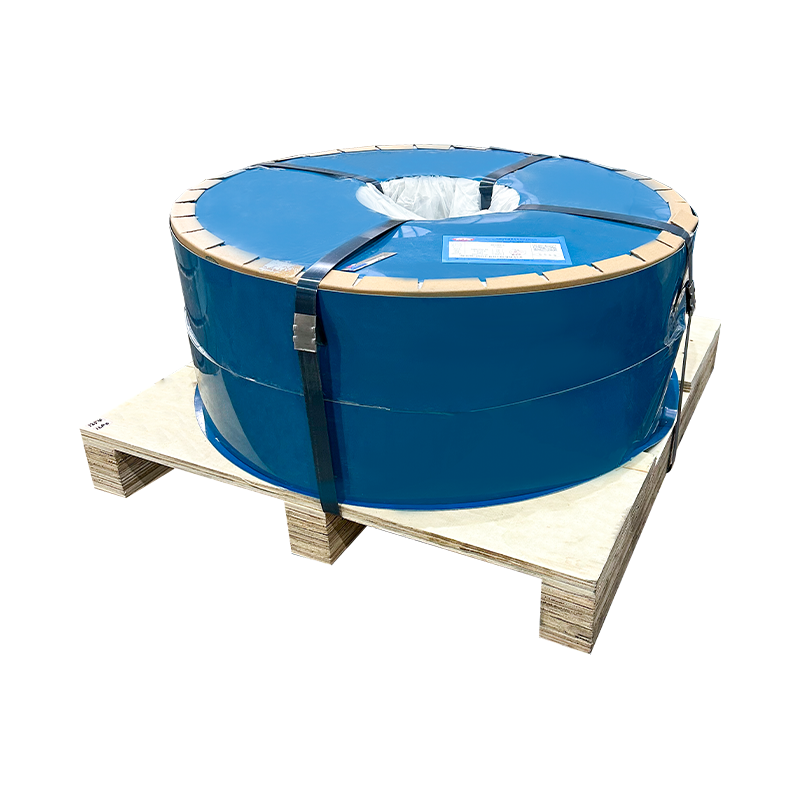 301 Cold Rolled Stainless Steel Strip For Spring Custom - WuXi Huansheng PrecisiWuXi Huansheng offer Wholesale Custom 301 Cold Rolled Stainless Steel Strip For Spring, 301 springMaterial characteristics• Composition b...View Product →
For deep-drawn parts, high elongation is more important than high strength. A fully annealed 304L or 316L with elongation over 40% reduces cracking and earing, provided the grain size is controlled. When you compare quotations, specify the temper and testing method; otherwise, a mill certificate showing only tensile strength can be misleading.
Corrosion Resistance and Grade Selection
Corrosion resistance is not a fixed number. A grade that performs well in one service environment may fail rapidly in another. Pitting and crevice corrosion are the main risks in chloride-bearing media. Molybdenum-bearing 316L is substantially more resistant than 304, which is why 316L appears frequently in heat exchangers, marine hardware, and medical instruments.
Automotive exhaust components face a different set of challenges: high temperature, condensation, road salt, and mechanical vibration. For bellows and expansion joints, stabilized austenitic grades such as 304L, 316Ti, and 321 are common due to their combination of fatigue strength and corrosion resistance. 304L cold-rolled stainless steel strip for automotive corrugated pipe is rolled to a controlled grain structure that supports repeated flexing.
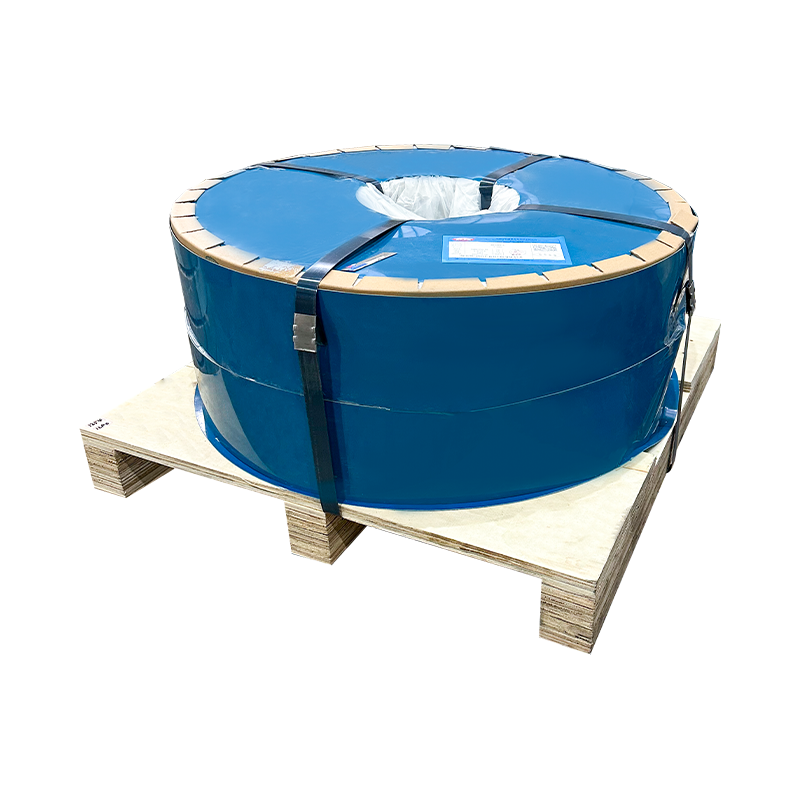 304L Cold Rolled Stainless Steel Strip For Automotive Corrugated Pipe Custom - WWuXi Huansheng offer Wholesale Custom 304L Cold Rolled Stainless Steel Strip For Automotive Corrugated Pipe, 304L stainless steel bellows...View Product →
In less aggressive environments, ferritic grades like 409L and 441 provide good oxidation resistance and lower cost. They are often found in exhaust systems, heating elements, and appliance components where chloride exposure is low.
Heat Resistance and Thermal Behavior
High-temperature service demands a material that forms a stable, adherent oxide scale. Austenitic grades 304 and 316L can be used intermittently up to about 870°C; their continuous service limit is usually lower, around 800°C. Where higher scaling resistance is needed, 309S with higher chromium and nickel content is often specified for electric heating tubes and braided hoses.
Stainless steel has a density of roughly 7.9 g/cm3 and a melting range that typically starts above 1400°C, but physical properties are rarely the deciding factor in strip selection. Thermal expansion matters more for welded assemblies: austenitic grades expand more than ferritic grades, so design and brazing processes must account for the difference.
Why Precision Strip Processing Changes the Answer
Material properties exist in the metal, but final performance depends on how the strip is rolled, slit, and finished. For thicknesses below 0.5 mm, uniformity becomes critical. Hardness variation across a coil, camber, edge burr, and surface roughness determine whether a stamping die runs smoothly or produces rejected parts.
A material certificate from the melt shop is not enough. Certification should reflect the final condition of the strip, including hardness, tensile properties, surface finish, and dimensional tolerance. This is especially true for medical and communication applications. For medical and food-contact uses, a clean, smooth surface is as important as chemistry. 316L cold-rolled stainless steel strip for medical applications is a good example: it requires fine surface quality and very tight thickness control to support hypodermic needle forming and similar processes.
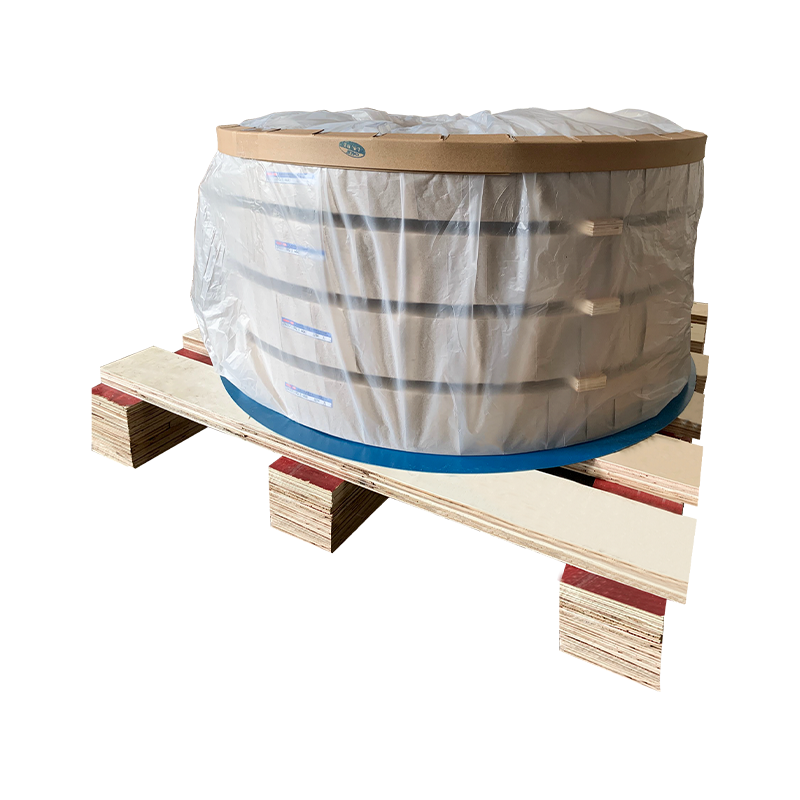 316L Cold Rolled Stainless Steel Strip For Medical Custom - WuXi Huansheng PreciWuXi Huansheng offer Wholesale Custom 316L Cold Rolled Stainless Steel Strip For Medical, 316L stainless steel needle tube material is a ...View Product →
Precision strip suppliers also match the grade to the end-use. A corrugated pipe needs high fatigue elongation; a spring needs a specific hardness range; a drawn cup needs deep-drawing quality with low anisotropy. Asking for "304" without a clear property profile invites variability.
Selecting stainless steel for precision parts starts with material properties, not with a familiar grade name. Check composition, mechanical values, corrosion resistance, and thermal limits. Then confirm that the strip processing, including thickness tolerance, hardness uniformity, and surface finish, matches your forming and service requirements. Global stainless steel coil prices shift with supply and demand, and market updates on stainless steel coil prices can help you plan purchase timing. For a practical review of available cold-rolled strip options and specifications, visit WuXi Huansheng's official site.
 Previous


