


 English
 русский

Content
- 1 What Is 309S Cold Rolled Stainless Steel Strip?
- 2 Chemical Composition and Why It Matters for Braid Tube Use
- 3 Mechanical Properties That Make 309S Suitable for Braiding
- 4 High-Temperature Performance in Braid Tube Service Environments
- 5 Processing 309S Cold Rolled Strip Into Braid Tube Wire
- 6 Key Specifications to Confirm When Sourcing 309S Strip for Braid Tube
- 7 Comparing 309S With Alternative Grades for Braid Tube Applications
- 8 Typical Applications of 309S Braided Stainless Tube
What Is 309S Cold Rolled Stainless Steel Strip?
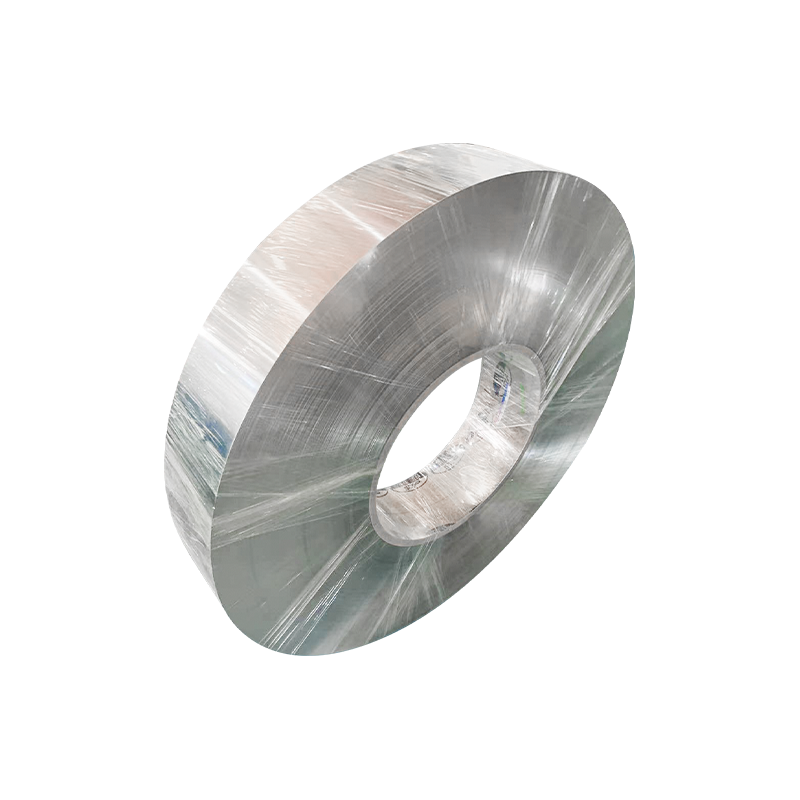
309S cold rolled stainless steel strip is a high-chromium, high-nickel austenitic stainless steel product that has been processed through cold rolling mills to achieve precise dimensional tolerances, a smooth surface finish, and enhanced mechanical properties. The "S" designation in 309S indicates a lower carbon content compared to standard 309 grade — typically 0.08% maximum — which significantly reduces the risk of sensitization and intergranular corrosion during and after welding or high-temperature exposure. This makes 309S particularly valuable in fabrication processes where the material undergoes deformation, welding, or braiding to form composite tube assemblies.
Cold rolling, as opposed to hot rolling, involves passing the stainless steel through rollers at room temperature. This process increases the tensile strength and hardness of the strip through work hardening, tightens dimensional tolerances to within fractions of a millimeter, and produces a surface finish that is far smoother and more consistent than hot rolled equivalents. For braid tube manufacturing — where the strip must be drawn, slit, or wound into fine wires and braided around a core tube — these cold-rolled characteristics are not merely desirable but functionally essential.
Chemical Composition and Why It Matters for Braid Tube Use
The performance of 309S in braid tube applications is rooted in its carefully controlled chemical composition. Understanding these elemental contributions helps engineers and procurement specialists make informed material decisions based on the specific service conditions the braid tube will encounter.
| Element | Typical Content (%) | Role in Performance |
| Chromium (Cr) | 22.0 – 24.0 | Forms protective oxide layer; primary oxidation resistance contributor |
| Nickel (Ni) | 12.0 – 15.0 | Stabilizes austenitic structure; enhances ductility and toughness |
| Carbon (C) | ≤ 0.08 | Low carbon reduces carbide precipitation and sensitization risk |
| Manganese (Mn) | ≤ 2.0 | Improves hot workability and austenite stability |
| Silicon (Si) | ≤ 1.0 | Enhances oxidation resistance at elevated temperatures |
| Phosphorus (P) / Sulfur (S) | ≤ 0.045 / ≤ 0.030 | Kept low to maintain toughness and surface quality during processing |
The high chromium content of 22–24% gives 309S exceptional oxidation resistance, far exceeding that of the more common 304 or 316 grades. This becomes critical in braid tube applications used in exhaust systems, heat exchangers, or high-temperature flexible hose assemblies, where the outer braid layer is directly exposed to elevated temperatures and oxidizing atmospheres. The elevated nickel content of 12–15% maintains the fully austenitic microstructure even under thermal cycling, preventing the phase transformations that would otherwise embrittle the braided wire and cause fatigue cracking under repeated flexing.
Mechanical Properties That Make 309S Suitable for Braiding
Braiding a tube requires the stainless steel strip or wire drawn from it to endure significant plastic deformation without fracturing. The strip must be ductile enough to be drawn into fine wire, flexible enough to be woven at high speed on braiding machines, and strong enough to provide the mechanical reinforcement and pressure containment the finished braid tube demands. 309S cold rolled strip delivers all three of these properties in a well-balanced combination.
Tensile Strength and Yield Strength
In the annealed condition, 309S exhibits a minimum tensile strength of approximately 515 MPa and a yield strength of around 205 MPa. After cold rolling, work hardening raises these values considerably — tensile strength can reach 800–1000 MPa depending on the degree of reduction, while the material still retains sufficient ductility for wire drawing and braiding operations. This strength-to-ductility balance is what makes cold rolled 309S strip preferable to softer annealed material for structural braid tube applications where the braid must resist hoop stress from internal pressure.
Elongation and Formability
Elongation at break for annealed 309S typically exceeds 40%, which is more than sufficient for multi-pass wire drawing from strip feedstock. Even after cold rolling to intermediate temper conditions, elongation values of 20–30% are achievable, ensuring the drawn wire can be wound, interlaced, and formed over mandrels without brittle fracture. This formability is a direct consequence of the stable austenitic microstructure maintained by the high nickel content, which suppresses stress-induced martensite formation — a common problem in lower-nickel grades like 301 that can cause wire breakage during braiding.
Hardness and Surface Quality
Cold rolled 309S strip is typically supplied with a surface hardness in the range of 85–95 HRB in the annealed state, rising to HRC 25–32 in harder temper conditions. The cold-rolled surface finish — commonly 2B or bright annealed (BA) — provides a smooth, clean substrate that minimizes die wear during wire drawing and ensures consistent cross-sectional geometry in the finished wire. Surface defects such as pits, scale, or rolled-in inclusions that are common in hot rolled material would create stress concentration points during braiding, increasing the risk of wire breakage at the braid interlace points.
High-Temperature Performance in Braid Tube Service Environments
One of the defining advantages of 309S over lower-alloy stainless grades for braid tube applications is its sustained performance at elevated temperatures. Braided stainless steel tubes are widely used in applications where the service temperature regularly exceeds what grades like 304 or 316 can handle reliably.
309S is rated for continuous service in oxidizing atmospheres up to approximately 1095°C (2000°F), and intermittent service up to around 1150°C (2100°F). This performance is enabled by the chromium-rich oxide scale that forms on the surface — a dense, adherent barrier that resists further oxidation without spalling or flaking under thermal cycling. For braid tubes used in automotive exhaust flexible joints, industrial furnace connections, or high-temperature gas transfer lines, this thermal stability prevents the outer braid from scaling, embrittling, or losing tensile integrity over extended service life.
Carburization resistance is another relevant property for certain braid tube environments. In atmospheres containing carbon-bearing gases at high temperatures — such as those found in petrochemical processing or heat treatment furnace systems — 309S resists carbon absorption into the metal matrix more effectively than standard 304-grade material, preserving toughness and preventing the embrittlement that would otherwise lead to fatigue cracking in the braid wires under flexing loads.
Processing 309S Cold Rolled Strip Into Braid Tube Wire
The manufacturing pathway from cold rolled strip to finished braid tube wire involves several precision processing stages, each of which must account for the specific characteristics of 309S.
- Slitting: Cold rolled 309S master coils are slit to narrow widths using precision rotary slitting lines. The slit edge quality — burr height, edge straightness, and flatness — directly affects wire drawing die life and wire surface quality. Proper slitting parameters and sharp slitting knives are essential to produce clean, consistent strip edges.
- Wire drawing: Slit strip is then drawn through a series of tungsten carbide dies, progressively reducing the cross-section to the target wire diameter. 309S work hardens rapidly during drawing, so intermediate annealing steps are required at intervals to restore ductility before further reduction. Bright annealing in a hydrogen or nitrogen atmosphere prevents surface oxidation and maintains the clean metallic surface needed for braiding.
- Spooling: Finished wire is spooled onto precision bobbins at controlled tension. Consistent spool winding is critical for smooth, tangle-free payoff on braiding machines, where interruptions cause production downtime and potential wire kinking defects in the finished braid.
- Braiding: Wire bobbins are loaded onto a rotary braiding machine, where carriers move in opposing helical paths around the core tube, interlacing the wires to form the braid layer. Machine speed, braid angle, pick count, and wire tension must all be precisely controlled to achieve the target braid density and mechanical properties.
Key Specifications to Confirm When Sourcing 309S Strip for Braid Tube
When sourcing 309S cold rolled stainless steel strip for braid tube wire production, the following specifications must be clearly defined in the material purchase order to ensure the strip performs correctly through all downstream processing stages.
- Thickness and width tolerances: Specify tight tolerances — typically ±0.01 mm on thickness and ±0.1 mm on width — to ensure consistent wire geometry after drawing and uniform braid coverage on the finished tube.
- Surface finish: 2B finish (cold rolled, heat treated, pickled, and skin-passed) or bright annealed (BA) finish should be specified depending on the wire drawing and final product requirements. BA finish is preferred when the highest surface cleanliness and oxide-free surface are required.
- Temper condition: Annealed (soft) strip is typically required for wire drawing applications to maximize ductility through the drawing passes. Confirm minimum elongation values in the mill test certificate.
- Edge condition: Mill edge or slit edge should be specified. For wire drawing, a deburred slit edge is generally preferred to prevent die scoring and wire surface marks during the initial drawing pass.
- Coil weight and inner diameter: Large coil weights minimize splice frequency during wire drawing. Confirm that the coil inner diameter is compatible with your decoiling equipment to prevent strip kinking at the start of each coil.
- Chemical certification: Request a full EN 10204 3.1 or 3.2 mill test certificate confirming chemical composition against ASTM A240 or equivalent standard for 309S, with heat number traceability for quality control and end-use documentation purposes.
Comparing 309S With Alternative Grades for Braid Tube Applications
Engineers evaluating material options for braid tube wire production sometimes consider alternative stainless grades. Understanding where 309S stands relative to these alternatives clarifies when it is the right specification and when a different grade might be more appropriate.
Compared to 304 stainless steel, 309S offers substantially superior oxidation resistance and higher strength retention at temperatures above 800°C — making it the clear choice for high-temperature braid tube service. The cost premium of 309S over 304 is justified by the extended service life it delivers in thermally demanding environments, where 304-grade braid would oxidize, scale, and lose mechanical integrity within a fraction of the service hours achieved by 309S.
Against 310S — another high-alloy austenitic grade with even higher chromium (24–26%) and nickel (19–22%) content — 309S is generally more cost-effective and easier to process into wire due to its lower work hardening rate. For most braid tube applications operating below 1050°C, 309S provides adequate performance without the significant cost increase associated with 310S. Only for the most extreme temperature environments does 310S offer meaningful additional benefit over well-processed 309S braid wire.
Typical Applications of 309S Braided Stainless Tube
The combination of high-temperature oxidation resistance, corrosion resistance, mechanical strength, and processing ductility makes 309S cold rolled strip the material of choice for braid tube production across a range of demanding end-use sectors.
- Automotive exhaust flexible connectors: Braided 309S wire over corrugated inner tubes absorbs vibration and thermal expansion in exhaust systems, withstanding continuous temperatures well above the capability of standard 304 braid.
- Industrial high-temperature hose assemblies: Used in furnace atmosphere transfer, kiln gas lines, and thermal processing equipment where the outer braid must resist oxidation and maintain burst pressure at elevated service temperatures.
- Petrochemical and refinery transfer lines: 309S braid provides both mechanical reinforcement and corrosion resistance for flexible hose used in high-temperature hydrocarbon and process gas transfer applications.
- Power generation and boiler systems: Flexible braided connections in steam and high-temperature water systems benefit from 309S's stability under thermal cycling and resistance to stress corrosion cracking in hot oxidizing environments.
Across all of these applications, the decision to specify 309S cold rolled stainless steel strip as the source material for braid wire is driven by the same fundamental logic: the unique combination of high chromium and nickel content, low carbon for weldability and corrosion resistance, and the dimensional precision and surface quality achieved through cold rolling collectively produce a braid tube that outperforms lower-alloy alternatives in service life, reliability, and total cost of ownership over the operational life of the equipment.
 Previous


