


 English
 русский

Content
- 1 Why Stainless Steel Strip Stands Out in Modern Manufacturing
- 2 Exceptional Corrosion Resistance Across Harsh Environments
- 3 Tight Dimensional Tolerances That Improve Precision Fabrication
- 4 Superior Strength-to-Weight Ratio for Lightweight Design
- 5 Outstanding Performance at Extreme Temperatures
- 6 Excellent Formability and Compatibility With High-Speed Processing
- 7 Hygienic Properties That Meet Strict Industry Standards
- 8 Long-Term Cost Efficiency Despite Higher Initial Material Cost
Why Stainless Steel Strip Stands Out in Modern Manufacturing
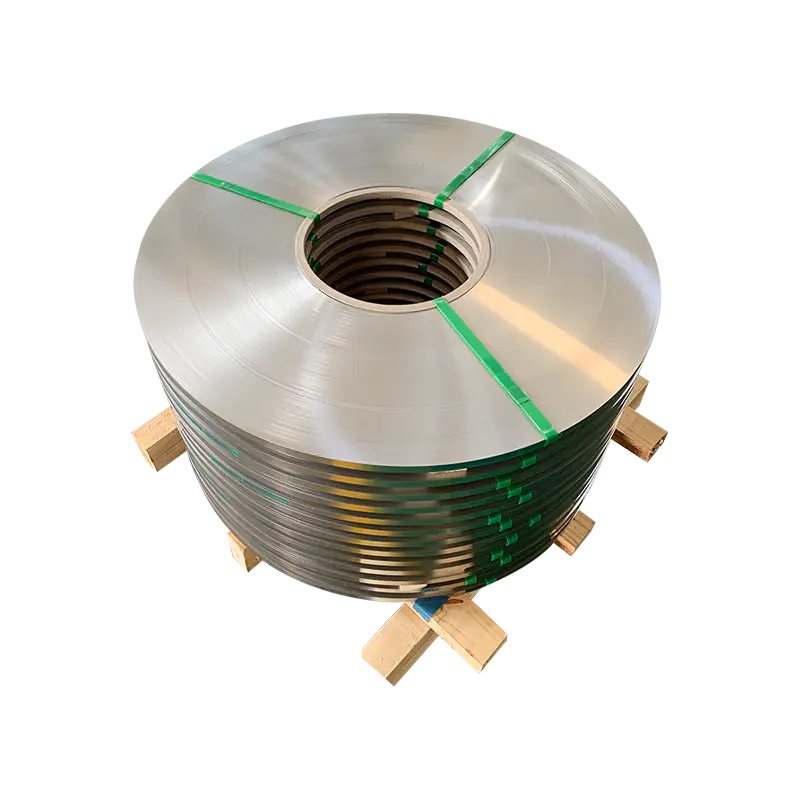
Stainless steel strip is a flat-rolled steel product produced in narrow widths and precise thicknesses, typically supplied in coil form for high-volume industrial processing. It's used across an extraordinary range of industries — from automotive and aerospace to medical devices, food processing equipment, electronics, and precision engineering. Despite being one of the most widely specified materials in manufacturing, many procurement managers and engineers underestimate just how many performance and operational advantages stainless steel strip delivers beyond its well-known corrosion resistance. This article explores seven of the most compelling and often overlooked benefits that make stainless steel strip a strategically superior material choice for manufacturing operations of all scales.
Exceptional Corrosion Resistance Across Harsh Environments
The most foundational benefit of stainless steel strip is its outstanding resistance to corrosion, but the depth of this advantage goes well beyond surface-level rust prevention. Stainless steel owes its corrosion resistance to a passive chromium oxide layer that forms naturally on its surface when exposed to oxygen. This self-repairing layer — which regenerates even after minor surface damage — protects the metal against chemical attack, moisture, acidic exposure, and oxidation without the need for coatings, platings, or ongoing surface treatments.
For manufacturers operating in demanding environments, the grade of stainless steel strip selected determines the precise level of protection available. Grade 304 is the most commonly used austenitic stainless steel, offering reliable corrosion resistance in general industrial and food-contact applications. Grade 316, which includes molybdenum, provides enhanced protection against chloride-induced pitting and crevice corrosion — making it the material of choice for marine environments, pharmaceutical equipment, and chemical processing lines. Grade 430, a ferritic stainless steel, performs well in mildly corrosive environments at a lower cost point.
This inherent corrosion resistance directly reduces maintenance costs, eliminates the need for protective coatings that can degrade or contaminate products, and extends the operational life of manufactured components significantly — often to decades rather than years.
Tight Dimensional Tolerances That Improve Precision Fabrication
One of the most practically valuable but frequently overlooked benefits of stainless steel strip is its availability in extremely tight dimensional tolerances. Unlike plate or sheet products, stainless steel strip is cold-rolled to precise thickness and width specifications, making it well-suited for applications where dimensional consistency is critical to part performance and assembly fit.
In high-speed stamping operations, progressive die work, and roll-forming processes, even minor thickness variation across a coil can cause tooling wear, dimensional inconsistency in finished parts, and increased scrap rates. Stainless steel strip manufactured to tight tolerances — often within ±0.001 inches or tighter — minimizes these variables, improving first-pass yield rates and reducing the cost of downstream quality inspection and rework.
For medical device manufacturers producing surgical instruments, implant components, or diagnostic equipment, dimensional precision is not merely a production preference — it's a regulatory requirement. Stainless steel strip's ability to meet these specifications reliably, batch after batch, makes it an indispensable material in precision-critical sectors.
Superior Strength-to-Weight Ratio for Lightweight Design
Stainless steel strip offers an impressive strength-to-weight ratio that allows engineers to design lighter components without sacrificing structural integrity. This is particularly valuable in industries where weight reduction directly translates to performance gains or operational savings — such as automotive manufacturing, aerospace component fabrication, and portable medical devices.
Austenitic grades like 301 and 304 can be work-hardened during cold rolling to achieve tensile strengths significantly higher than in their annealed state, enabling the use of thinner gauges that still meet load-bearing requirements. Martensitic grades such as 410 and 420 offer even higher hardness levels after heat treatment, making them suitable for cutting tools, springs, and wear-resistant components where both strength and low mass are essential.
| Grade | Type | Typical Tensile Strength | Common Application |
| 301 | Austenitic | Up to 1300 MPa (work-hardened) | Springs, fasteners, trim |
| 304 | Austenitic | 515–620 MPa (annealed) | Food equipment, general fab |
| 316 | Austenitic | 515–690 MPa | Marine, pharmaceutical |
| 410 | Martensitic | Up to 1400 MPa (hardened) | Blades, wear parts, valves |
| 430 | Ferritic | 450–600 MPa | Appliances, decorative trim |
Outstanding Performance at Extreme Temperatures
Many manufacturing environments subject components to temperatures that would degrade or compromise alternative materials. Stainless steel strip maintains its structural integrity, dimensional stability, and corrosion resistance across a remarkably wide temperature range — from cryogenic conditions to sustained high-heat exposure — making it one of the few materials that performs reliably in both thermal extremes.
High-Temperature Applications
Austenitic grades such as 309 and 310 are specifically engineered for high-temperature service, retaining their oxidation resistance and mechanical properties at temperatures up to 1100°C (2012°F). This makes them essential for furnace components, heat exchangers, exhaust systems, and industrial oven parts where standard carbon steel would scale, warp, or fail rapidly.
Cryogenic Applications
At the opposite end of the spectrum, austenitic stainless steel strip remains ductile and impact-resistant at cryogenic temperatures where other metals become brittle and prone to fracture. This property is critical for manufacturers producing components used in liquefied natural gas (LNG) systems, aerospace fuel systems, and scientific research equipment operating near absolute zero.
Excellent Formability and Compatibility With High-Speed Processing
A common misconception is that stainless steel is difficult to work with compared to mild steel or aluminum. In strip form, however, stainless steel is well-suited to a wide range of high-speed metal forming operations, provided the correct grade and temper are selected for the intended process. This formability benefit directly impacts manufacturing efficiency and tooling longevity.
Annealed austenitic grades like 304 and 316 exhibit excellent deep-drawing and stretch-forming characteristics, making them suitable for producing complex shapes in a single progressive die sequence. Ferritic grades such as 430 offer good formability with less springback than austenitic grades, which can simplify tooling design for bent or roll-formed profiles.
Stainless steel strip in coil form is also ideally configured for stamping presses, roll forming lines, and automatic screw machines — all of which benefit from continuous feed of consistent, pre-measured material. The coil format reduces material handling time, minimizes feed interruptions, and supports lean manufacturing principles by enabling continuous production flows with minimal operator intervention.
Hygienic Properties That Meet Strict Industry Standards
In industries where cleanliness and contamination prevention are non-negotiable, stainless steel strip offers a combination of surface properties that no other widely available metal can match. Its non-porous surface, resistance to bacterial adhesion, and compatibility with aggressive cleaning agents and sterilization methods make it the material of choice in food processing, pharmaceutical manufacturing, beverage production, and medical device fabrication.
- Non-reactive surface: Stainless steel does not leach chemicals into food or pharmaceutical products, ensuring compliance with FDA, EU food contact regulations, and cGMP (current Good Manufacturing Practice) standards.
- Easy to clean and sterilize: The smooth, non-porous surface resists biofilm formation and can withstand repeated steam sterilization, chemical disinfection, and high-pressure washdowns without degradation.
- No surface coatings required: Unlike carbon steel or aluminum, stainless steel does not require paint, anodizing, or protective coatings that could flake, chip, or contaminate hygienic environments.
- Compliant with HACCP principles: Stainless steel surfaces support hazard analysis and critical control point protocols in food manufacturing by providing surfaces that are easily inspected, cleaned, and verified as contaminant-free.
These hygienic properties reduce the regulatory burden on manufacturers, simplify audit compliance, and minimize the risk of costly product recalls or contamination events that can severely damage brand reputation and revenue.
Long-Term Cost Efficiency Despite Higher Initial Material Cost
One of the most strategically important benefits of stainless steel strip — and the one most often underweighted in material selection decisions — is its long-term total cost of ownership. While stainless steel carries a higher purchase price per kilogram than carbon steel or aluminum in many cases, its superior durability, minimal maintenance requirements, and extended service life make it significantly more cost-effective over the full lifecycle of a manufactured component or production system.
Consider a manufacturer producing conveyor components for a food processing line. Carbon steel components may require painting, regular rust treatment, and replacement every three to five years under daily washdown conditions. The equivalent stainless steel strip components require no coating, resist corrosion indefinitely under the same conditions, and may remain in service for fifteen to twenty years with only basic cleaning. When replacement costs, production downtime during maintenance, labor for surface treatment, and regulatory compliance costs are factored into the calculation, stainless steel frequently delivers a lower total cost despite its higher raw material price.
- Reduced maintenance frequency: Components made from stainless steel strip require significantly less scheduled maintenance than those made from coated or plated alternative metals.
- Lower scrap rates in production: Consistent dimensional tolerances in stainless steel strip reduce defective parts and material waste in high-volume stamping or forming operations.
- High residual and recycling value: Stainless steel is one of the most recyclable materials in manufacturing, with a recycling rate exceeding 90% in many markets. End-of-life scrap retains significant value, partially offsetting the initial material cost.
- Avoidance of coating and treatment costs: Eliminating the need for galvanizing, painting, or plating removes an entire processing step and its associated labor, materials, and quality control overhead.
- Longer tooling life: When strip is supplied with consistent hardness and surface finish, tooling wear in stamping and forming operations is more predictable, extending die life and reducing unplanned downtime.
For manufacturing operations focused on quality, reliability, and regulatory compliance, stainless steel strip is not simply a material choice — it is a strategic investment that pays dividends across the full production and product lifecycle. Its combination of physical performance, processing versatility, hygienic properties, and long-term economic value makes it one of the most well-rounded and dependable materials available to modern manufacturers across virtually every industrial sector.
 Previous


