


 English
 русский

Content
- 1 What Steel Is Made Of: Iron and Carbon
- 2 What Makes Stainless Steel Different: The Role of Chromium
- 3 Comparing Steel and Stainless Steel
- 4 Stainless Steel Families and Their Composition Ranges
- 5 How Composition Affects Selection for Industrial Strip Applications
- 6 Practical Takeaways for Buyers and Engineers
A stainless steel strip that fails in service rarely fails because the steel is "bad" in a general sense. It fails because the alloy composition does not match the environment, the forming operation, or the joining method. If you design a corrugated pipe for a diesel exhaust system and choose a grade with insufficient molybdenum, chloride pitting can appear before the first maintenance cycle. If you specify a high-carbon grade for a deep-drawing application, the strip may crack at the bend radius. The composition of steel and stainless steel is the primary factor that separates a robust production run from scrapped parts.
What Steel Is Made Of: Iron and Carbon
Steel starts with iron ore reduced to iron, which is then combined with carbon in a controlled amount. In plain carbon steel, carbon is the main strengthening element. The alloy composition typically includes:
- Iron (Fe): 97% or more by weight in low-carbon steel.
- Carbon (C): 0.05% to 0.25% for mild steel, up to 0.60% for medium carbon, and up to 1.0% or more for high-carbon grades.
- Manganese (Mn): 0.25% to 1.65% for deoxidation and to reduce sulfur brittleness.
- Silicon (Si): up to 0.60% as a deoxidizer.
- Phosphorus (P) and Sulfur (S): controlled to low levels, typically below 0.05%.
Carbon raises hardness and strength but reduces ductility and weldability. For cold-rolled strip, manufacturers often prefer low-carbon steel because it can be formed easily without cracking, but it will need a protective coating unless the environment is dry.
What Makes Stainless Steel Different: The Role of Chromium
Stainless steel is not simply "steel that does not rust." It is a family of iron-based alloys that must contain at least 10.5% chromium. Chromium forms a passive oxide film on the surface. When the surface is scratched, the film reforms in the presence of oxygen. This self-healing property is what gives stainless steel its corrosion resistance.
Additional elements are added to achieve specific performance:
| Element | Typical role | Common effects |
|---|---|---|
| Chromium (Cr) | Minimum 10.5% | Forms the protective passive layer; the foundation of stainless steel |
| Nickel (Ni) | 6% to 22% | Stabilizes austenitic structure; improves formability and toughness |
| Molybdenum (Mo) | 0% to 5% | Enhances pitting and crevice corrosion resistance in chloride environments |
| Carbon (C) | Typically ≤1.2% | Increases strength but reduces corrosion resistance; kept low in most grades |
| Titanium (Ti) / Niobium (Nb) | Stabilizing additions | Prevents sensitization by tying up carbon; improves weldability |
| Nitrogen (N) | 0.1% to 0.5% | Increases strength and pitting resistance in duplex and austenitic grades |
Comparing Steel and Stainless Steel
Carbon steel and stainless steel serve different purposes, and the choice depends on the life-cycle cost, not just the material cost. Carbon steel can deliver higher tensile strength at a lower price, and it is magnetic. Stainless steel carries a higher initial price, but it can eliminate painting, plating, and frequent replacements in aggressive environments.
| Property | Carbon steel | Stainless steel |
|---|---|---|
| Corrosion resistance | Requires coating or a dry environment | Inherent passive film |
| Cost | Lower material cost | Higher material cost |
| Strength | Can be hardened by carbon content | Strength from alloying and cold work |
| Weldability | Good with low carbon; needs filler for high carbon | Depends on grade; low-carbon grades weld well |
| Magnetic | Ferromagnetic | Austenitic grades non-magnetic; ferritic and martensitic magnetic |
| Formability | Good for mild steel | Excellent for austenitic grades |
Stainless Steel Families and Their Composition Ranges
Stainless steel grades are grouped into families based on their microstructure and composition. The two most relevant families for cold-rolled strip are austenitic and ferritic, with martensitic and duplex grades used for specialized applications.
- Austenitic: 16% to 26% Cr, 6% to 22% Ni, low carbon. Non-magnetic in annealed condition. Excellent formability and weldability.
- Ferritic: 10.5% to 27% Cr, little to no nickel. Magnetic. Good corrosion resistance in mild environments.
- Martensitic: 11% to 17% Cr, 0.15% to 1.0% C. Hardened by heat treatment. Used for cutlery and springs.
- Duplex: 20% to 26% Cr, 4.7% to 8% Ni. Higher strength and stress corrosion cracking resistance.
Among the austenitic grades, the volume leader is 304, with 18% to 20% Cr and 8% to 12% Ni. Its balanced composition makes it suitable for a wide range of forming operations, from stamping to deep drawing.
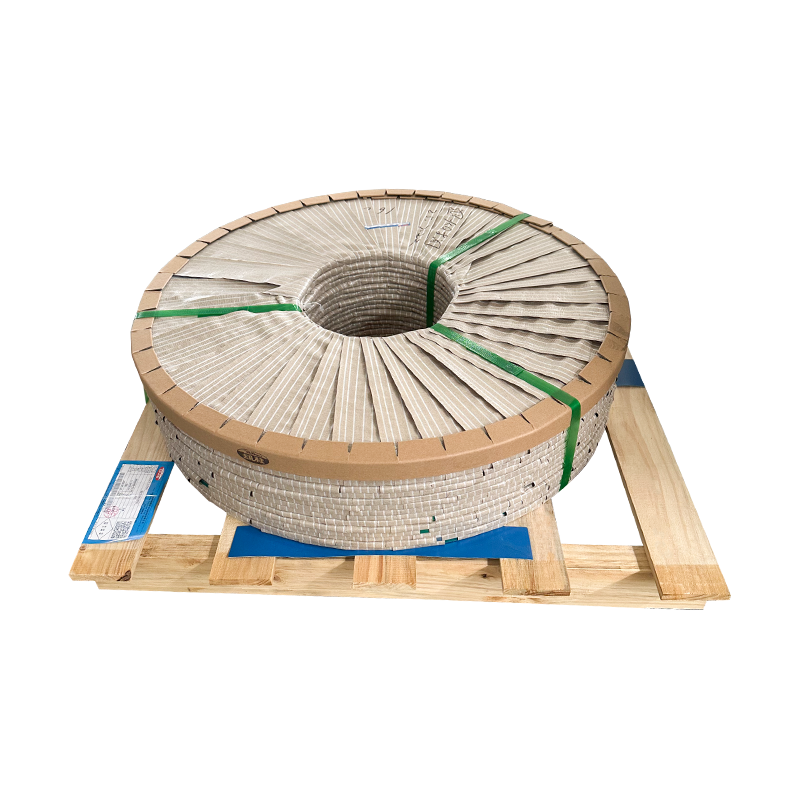 304 Cold Rolled Stainless Steel Strip for Diverse Applications304 is a versatile austenitic grade with 18% chromium and 8% nickel, offering excellent corrosion resistance and formability. Its balanced composition suits stamping and deep drawing, and it is widely used in humid or mildly corrosive environments, with options for various finishes.View Product →
For chloride-rich environments, 316L adds 2% to 3% molybdenum and remains a standard choice for chemical processing. Its low carbon content also protects the material from sensitization during welding.
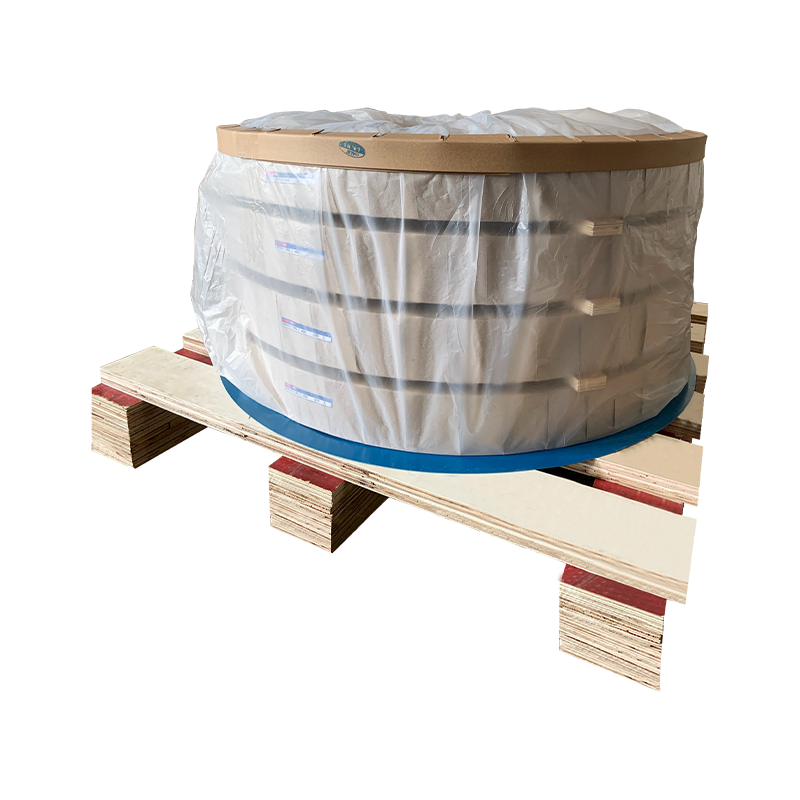 316L Stainless Steel Strip for Corrosive Environments316L is an ultra-low-carbon austenitic steel with molybdenum, enhancing resistance to chlorides and pitting. It maintains stability in marine and chemical settings, provides good weldability without post-weld heat treatment, and is ideal for high-end industrial uses.View Product →
301, with 16% to 18% Cr and 6% to 8% Ni, develops high strength through cold work, making it a dependable option for springs, cylinder gaskets, and textile reeds.
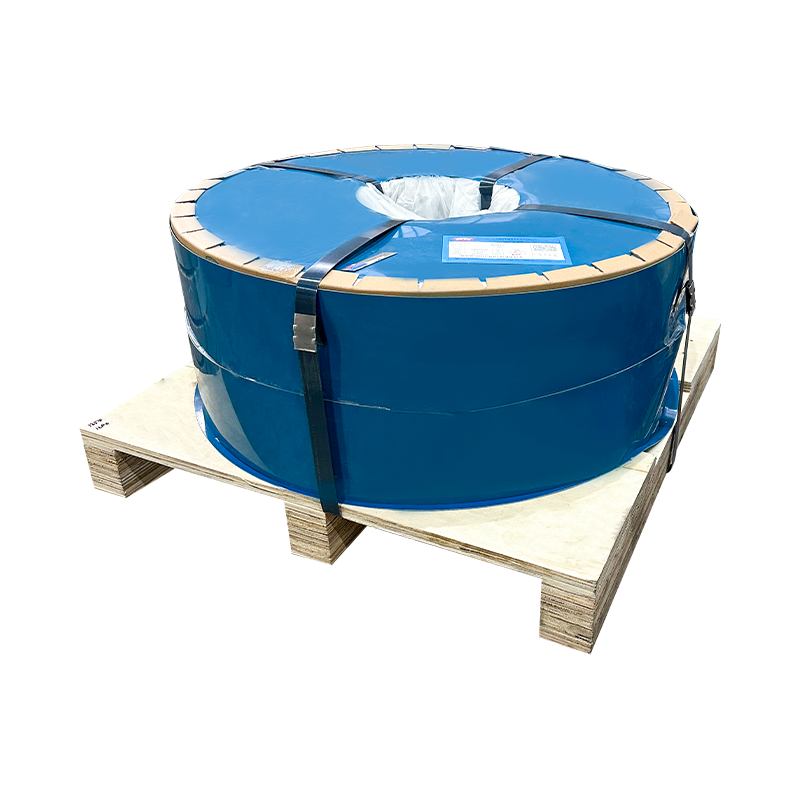 301 Stainless Steel Strip for Springs and Elastic Parts301 is an austenitic steel that gains high strength through cold working, making it suitable for springs, gaskets, and textile reeds. Its good corrosion resistance and elasticity outperform carbon spring steel in humid or corrosive environments.View Product →
How Composition Affects Selection for Industrial Strip Applications
The composition of a stainless steel strip determines how it behaves in a real operating environment. For automotive metal bellows, the strip must withstand vibration, high exhaust temperatures, and road salt. 316Ti and 321 grades add titanium to stabilize carbon, which prevents intergranular corrosion after exposure to elevated temperatures. 409L, with 10.5% to 11.5% Cr and no nickel, offers a lower-cost ferritic option for exhaust components, but it sacrifices formability and high-temperature strength.
For medical devices, low-carbon versions such as 304L and 316L are preferred because they offer reliable corrosion resistance and biocompatibility after bending and welding. Manufacturing equipment must achieve precise tolerances on thickness and width, especially for hypodermic needles and optical cables. For a closer look at the industries that commonly use 304L stainless steel strips, see this overview.
316L Stainless Steel Strip for Corrosive Environments316L is an ultra-low-carbon austenitic steel with molybdenum, enhancing resistance to chlorides and pitting. It maintains stability in marine and chemical settings, provides good weldability without post-weld heat treatment, and is ideal for high-end industrial uses.View Product →
In chemical processing, molybdenum-bearing grades such as 316L resist pitting from chlorides and acids. In optical ground wire (OPGW), 304 and 316L provide structural strength and long-term atmospheric stability. In spring and gasket applications, 301 uses cold work to reach high strength, but the higher initial carbon content can affect magnetic behavior in some assemblies.
301 Stainless Steel Strip for Springs and Elastic Parts301 is an austenitic steel that gains high strength through cold working, making it suitable for springs, gaskets, and textile reeds. Its good corrosion resistance and elasticity outperform carbon spring steel in humid or corrosive environments.View Product →
For a cold-rolled stainless steel strip supplier, composition is not an abstract material science concept. It is the basis for every grade that leaves the mill. An experienced manufacturer can map a buyer's environment and forming requirements to a specific grade, then control the strip thickness, width, and hardness to match the downstream process.
Practical Takeaways for Buyers and Engineers
Start with the service environment. If the strip will contact chlorides, ensure the grade contains at least 2% molybdenum. If deep drawing or welding is involved, keep carbon below 0.03% to avoid sensitization. If high-temperature strength is required, consider stabilized grades with titanium or niobium. If cost is the primary driver and the environment is mild, a ferritic grade such as 409L may be sufficient.
For strip purchasers, the composition is not the only variable. Hardness, thickness tolerance, surface finish, and edge quality all affect the yield of your manufacturing process. A 304 austenitic strip with a tight chamfered edge will perform differently from a blanked edge in a high-speed stamping die. That is why a responsible supplier should be able to document the chemical analysis and mechanical properties for every heat.
The bottom line: choose the grade based on facts, not habit. Check the carbon limit for welding, the nickel content for formability, and the molybdenum level for chloride exposure. When you have that information, you can turn the composition of steel and stainless steel into a reliable production decision. For a practical starting point, review the available 300 series stainless steel strip options that match your intended process.
 Previous


