


 English
 русский

Content
When a buyer in the supply chain asks for a description of stainless steel, the answer goes far beyond the basic phrase “it does not rust.” The real question is whether a specific grade will survive the service environment, maintain its mechanical properties, and lend itself to the manufacturing process used in your shop. Stainless steel is an iron-based alloy containing at least 10.5 percent chromium. This chromium reacts with oxygen to form a self-healing chromium oxide layer that gives the alloy corrosion resistance. The family is broad, with grades tailored for higher strength, better weldability, or exceptional resistance to chlorides. For industrial buyers, choosing the right stainless steel is a cost decision as much as a technical one, because the wrong grade can fail prematurely and create expensive rework or field failures.
Composition and Corrosion Resistance
The definition of stainless steel begins with chromium. Without a chromium content of at least 10.5 percent, the passive oxide film that repels rust will not form reliably. Most practical stainless grades sit well above that minimum, with chromium levels in the range of 17 to 26 percent. Nickel is added to austenitic grades to stabilise the face-centered cubic structure, improving ductility and toughness. Molybdenum enhances resistance to pitting and crevice corrosion in chloride-rich environments. Nitrogen increases strength and stabilises the austenitic phase. Carbon is kept low or carefully controlled, because it can promote chromium carbide precipitation at grain boundaries and cause sensitisation during welding.
The corrosion mechanism is what makes “stainless” visible. When the alloy surface is scratched, fresh chromium reacts with oxygen to rebuild the oxide film. This self-healing behaviour separates stainless steel from carbon steel that is protected only by a sacrificial coating or paint. In practice, this means that cleaning, ventilation, and drainage can significantly influence the service life of the material in a real plant.
Main Families of Stainless Steel
Stainless steel is not one material but a family. The five main structural types are austenitic, ferritic, martensitic, duplex, and precipitation hardening. Each family brings a different balance of corrosion resistance, strength, formability, and response to heat treatment.
| Family | Typical Chromium | Nickel | Key Characteristic | Example Grades |
|---|---|---|---|---|
| Austenitic | 16-26% | 8-20% | Excellent formability and weldability; non-magnetic in annealed condition | 304, 316, 321 |
| Ferritic | 11-30% | Low or zero | Good stress-corrosion resistance; magnetic; limited low-temperature toughness | 409L, 430, 441 |
| Martensitic | 12-18% | Usually none | Hardened by heat treatment; high strength; lower corrosion resistance | 410, 420 |
| Duplex | 20-26% | 5-8% | High strength and good resistance to stress corrosion cracking | 2205, 2507 |
| Precipitation hardening | 14-17% | 4-7% | High strength through aging; useful for aerospace and precision parts | 17-4 PH |
In the cold-rolled strip industry, the most common supply categories are the 200, 300, and 400 series. The 300 series represents the bulk of demand for precision industrial applications because of the balance between corrosion resistance and formability. The 200 series uses manganese to replace part of the nickel, providing an economical alternative in less severe service conditions. The 400 series offers higher hardness or improved localised corrosion resistance in specific environments.
Properties That Matter in Engineering
Corrosion Resistance
Corrosion resistance is not a single value. It depends on the environment. Uniform corrosion occurs when the metal is exposed to a strong acid, while pitting and crevice attack happen in chloride-bearing fluids. Stress corrosion cracking occurs under tensile stress combined with a corrosive medium. For coastal, chemical, and marine environments, molybdenum-bearing grades such as 316L are often the safer starting point. Always validate the grade against the actual process fluid, operating temperature, and cleaning cycle.
Strength and Formability
Strength and formability often compete. Austenitic grades work-harden quickly, so the temper and thickness of a cold-rolled strip determine how many bends or draws can be made before annealing or die damage. Ferritic and martensitic grades carry different cold work responses. When you require deep drawing or tight radius bending, choose a grade and temper with the elongation measured in the final strip direction.
Magnetic and Thermal Behaviour
Magnetic permeability is an important specification in some components. Austenitic stainless steel is largely non-magnetic in the annealed condition, but cold rolling can induce transformation to martensite, creating some magnetic response. If a non-magnetic requirement is strict, you need to control the reduction rate and possibly use a higher nickel grade. Thermal expansion also varies by family; austenitic grades expand more than ferritic grades. This affects seals, welded assemblies, and dimensional tolerances at elevated temperature.
From Coil to Precision Strip
Many buyers focus on the alloy grade but overlook the form of the material. Stainless steel is produced as plate, sheet, coil, strip, bar, and wire. For automated stamping, bellows forming, and small-diameter tube manufacturing, cold-rolled strip is the preferred input. Strip is drawn through a rolling mill to achieve thin gauges with controlled tolerances and surface finish. At WuXi Huansheng, we supply cold-rolled stainless steel strip in thicknesses from 0.03 mm to 3.0 mm, with a maximum width of 550 mm. The rolling process, whether produced on a 20-high mill or another precision stand, determines the thickness consistency across the width and the visible surface quality.
The manufacturing chain from hot-rolled coil to final strip involves cold rolling, annealing, and skin passing. Each step shifts mechanical properties and surface characteristics. That is why precision cold rolling craftsmanship is often as important as the chemistry of the steel. A consistent strip leads to fewer stops in stamping lines, more predictable weld quality in tube making, and a lower rejection rate overall. The strip is delivered in coil form, and the coil weight affects press setup time. A heavier coil keeps stamping lines running longer between changes, but it also demands a more robust uncoiler and handling equipment.
Selecting a Grade for Real-World Applications
The choice of a stainless steel grade should be driven by the service environment and the manufacturing process. Here are three examples where the alloy and the strip specifications work together.
Stamping and Formed Parts
Stamping operations need a material that holds a consistent temper and thickness while surviving repeated punch and die contact. Austenitic grades such as 304 offer good formability and corrosion resistance. For cold-rolled strip used in automotive gaskets, springs, and other formed components, the strip surface must be free of streaks and the edges clean to avoid tool wear. 304 is a reliable option for formed parts where corrosion resistance and ductility need to coexist.
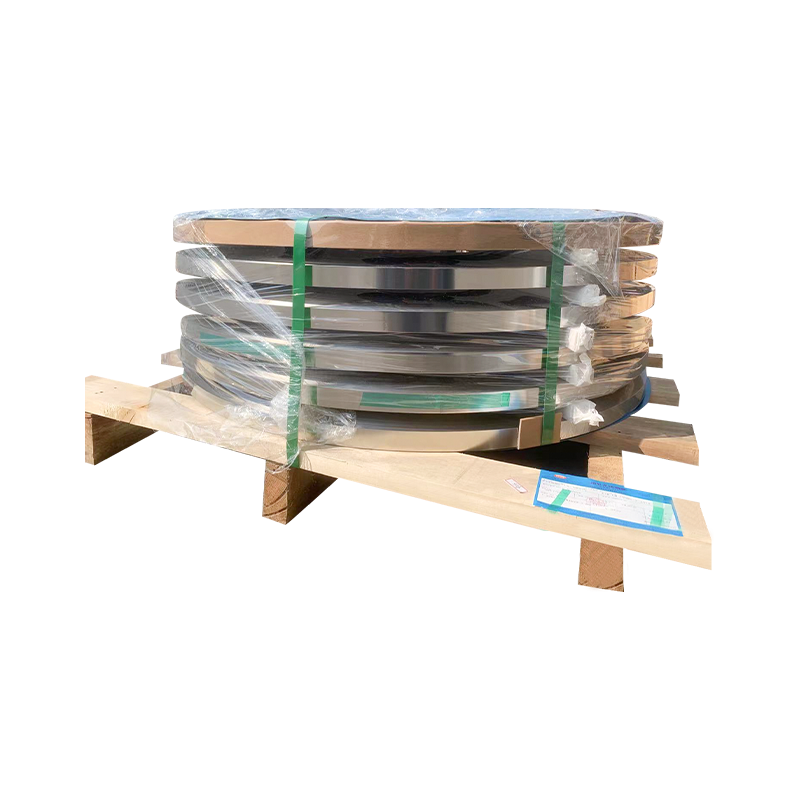 304 Cold Rolled Stainless Steel Strip for Stamping ApplicationsDesigned for stamping operations, this austenitic 304 strip offers good formability and corrosion resistance, with a consistent temper and thickness to withstand repeated die contact and reduce tool wear.View Product →
Medical Components
Hypodermic needles, surgical instruments, and implantable devices require a high degree of surface cleanliness, tight tolerances, and often a specific magnetic response. For needle tubing, the strip is rolled to a very thin gauge and formed into a seamless or welded tube. A molybdenum-bearing grade like 316L improves pitting resistance and works with the fine-diameter geometry common in medical products.
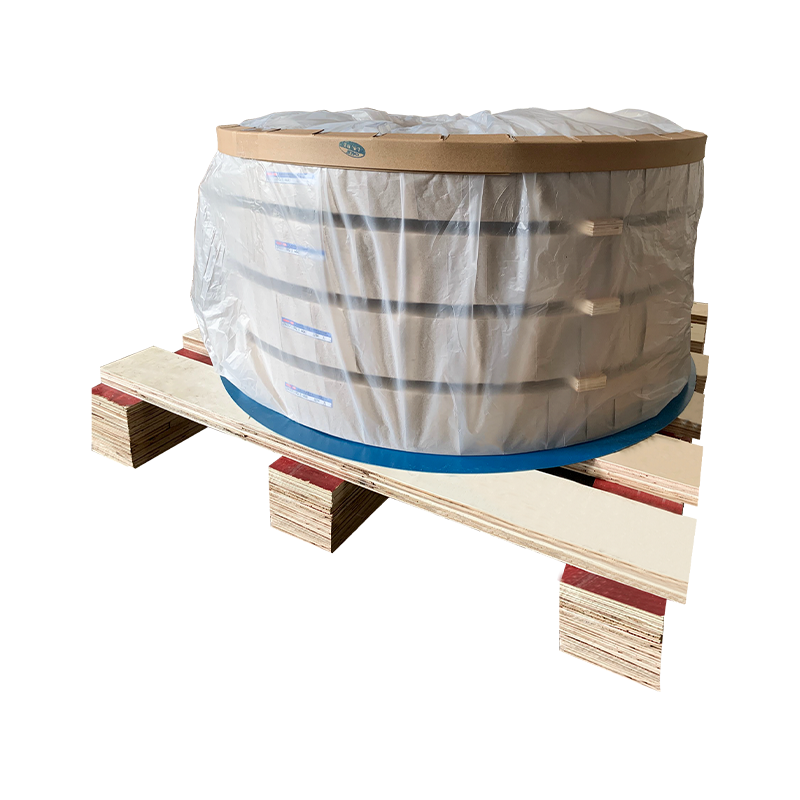 316L Cold Rolled Stainless Steel Strip for Medical DevicesWith molybdenum for enhanced pitting resistance and an ultra-low carbon content, this strip is suited for precision medical tubing and instruments that require high cleanliness, tight tolerances, and sterilization resistance.View Product →
Chemical Fillers and Process Equipment
Chemical towers and scrubbing systems rely on corrosion resistance in the process fluid. 304L and 316L are common choices, especially when welding is involved, because the low carbon version reduces carbide precipitation and the risk of intergranular corrosion. The strip is often formed into corrugated or structured packing. A uniform thickness and a consistent surface roughness help maximise the contact area between liquid and gas.
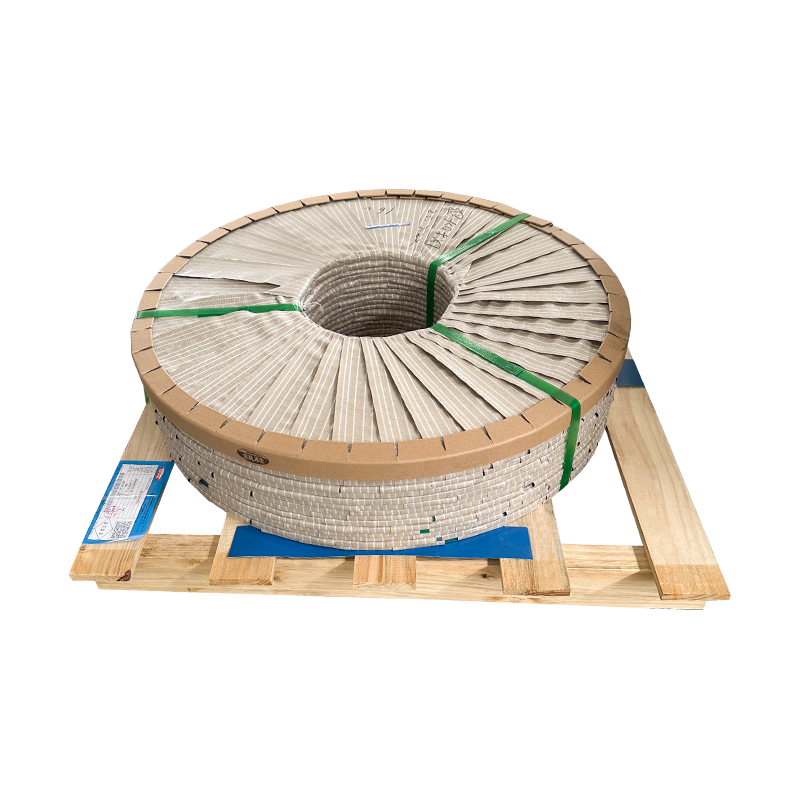 304L Cold Rolled Stainless Steel Strip for Chemical Tower PackingThis low-carbon 304L strip provides excellent resistance to intergranular corrosion, making it ideal for forming corrugated or structured packing in chemical towers where uniform thickness and surface roughness maximize contact efficiency.View Product →
Quality Control and Supply Consistency
When a stainless steel strip supplier receives a purchase order, the specifications in the description are only the beginning. The real value is in the repeatability of every delivered coil. A quality system that covers incoming material inspection, in-process rolling, annealing, and final surface checks is essential. At WuXi Huansheng, our testing is implemented from raw material to finished product, with an experienced technical team overseeing the key process steps. Incoming hot-rolled coils are checked for chemistry, width, and thickness before cold rolling. During rolling, operators continuously monitor gauge and shape, and surface inspections are performed at each anneal pass. The goal is a one-millimetre strip that behaves exactly the same from the start of the coil to the end.
The plant has a registered capital of 60 million RMB, a workshop area of about 45,990 square meters, and an annual capacity of up to 72,000 tons. These capabilities support a stainless steel strip manufacturer that can serve automotive, medical, and industrial customers across domestic and international markets.
If you are evaluating a stainless steel strip supplier, the material description is only half the equation. The processing route, tolerance repeatability, and the supplier’s knowledge of grade-to-application pairing have a direct effect on your yield and total cost. Link the alloy chemistry to your actual forming conditions and environmental load. That is where a description of stainless steel becomes more than a textbook definition and turns into a purchasing checklist that protects your production line.
 Previous


