


 English
 русский

Content
- 1 What Is Stainless Steel Strip and How Is It Produced?
- 2 Chemical Composition: 304 vs 304L Side by Side
- 3 Mechanical Properties and How They Differ
- 4 The Sensitization Problem and Why 304L Exists
- 5 Surface Finishes Available for 304/304L Strip
- 6 Key Applications by Industry
- 7 How to Specify 304/304L Strip Correctly
What Is Stainless Steel Strip and How Is It Produced?
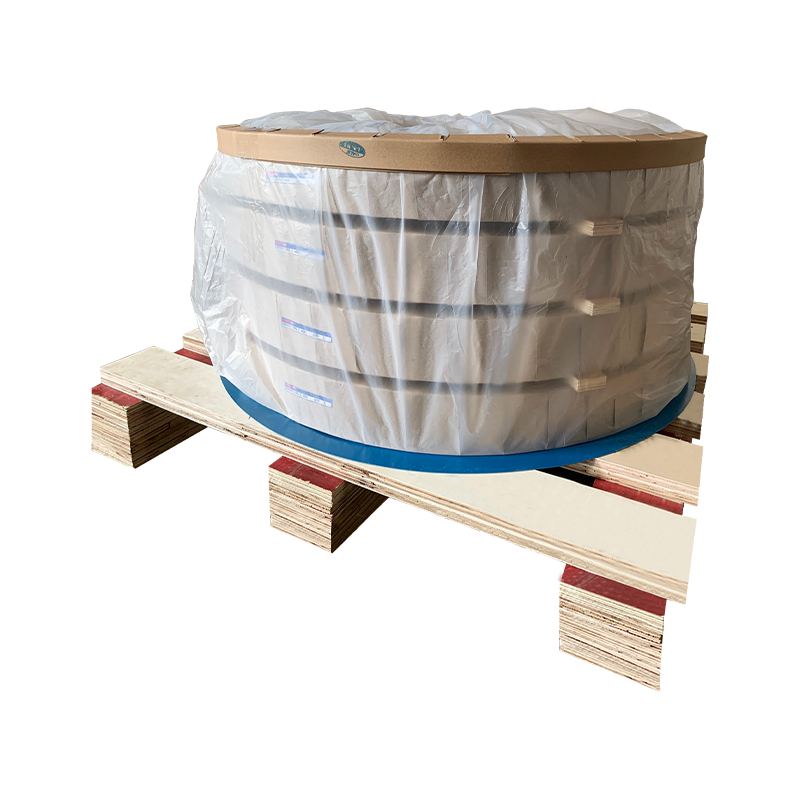
Stainless steel strip is a flat-rolled product with a width typically ranging from 6 mm to 600 mm and a thickness from 0.1 mm to 3.0 mm. It is produced by cold-rolling hot-rolled coil through a series of progressively tighter rolling passes, achieving tight dimensional tolerances and a smooth, consistent surface finish. The cold-rolling process also work-hardens the steel, improving its tensile strength and hardness compared to the annealed base material. Stainless steel strip is supplied in coil form or cut into lengths, and it serves as the starting material for stamped parts, formed components, springs, fasteners, and welded assemblies across dozens of industries.
Within the austenitic stainless steel family — by far the most widely used category globally — the 304 and 304L grades account for the majority of strip production and consumption. Both grades share the same base alloy chemistry of chromium and nickel, but they differ in one critical element: carbon content. This single difference has meaningful consequences for weldability, corrosion resistance in specific environments, and suitability for particular fabrication processes. Selecting the wrong grade is a common and avoidable source of premature component failure.
Chemical Composition: 304 vs 304L Side by Side
The defining chemical difference between 304 and 304L is the maximum allowable carbon content. Standard 304 permits up to 0.08% carbon, while 304L — the "L" stands for low carbon — is restricted to a maximum of 0.03% carbon. All other composition ranges are identical or nearly so. Both grades contain 18–20% chromium and 8–10.5% nickel, which together produce the passive oxide layer responsible for corrosion resistance. The remaining balance is iron, with small allowances for manganese, silicon, phosphorus, sulfur, and nitrogen.
| Element | Grade 304 (% max) | Grade 304L (% max) |
| Carbon (C) | 0.08 | 0.03 |
| Chromium (Cr) | 18.0 – 20.0 | 18.0 – 20.0 |
| Nickel (Ni) | 8.0 – 10.5 | 8.0 – 12.0 |
| Manganese (Mn) | 2.0 | 2.0 |
| Silicon (Si) | 0.75 | 0.75 |
| Phosphorus (P) | 0.045 | 0.045 |
| Sulfur (S) | 0.03 | 0.03 |
| Nitrogen (N) | 0.10 | 0.10 |
In practice, many mills produce dual-certified 304/304L strip by melting the heat to meet the tighter 304L carbon limit, which automatically also satisfies 304 requirements. This allows a single coil to be sold and certified to either specification, simplifying inventory management for distributors and fabricators who work with both grades.
Mechanical Properties and How They Differ
The lower carbon content in 304L comes with a modest but measurable reduction in mechanical strength in the annealed condition. Grade 304 has a minimum yield strength of 205 MPa and a minimum tensile strength of 515 MPa under ASTM A240 requirements. Grade 304L specifies a lower minimum yield of 170 MPa and a minimum tensile of 485 MPa. The difference is not large, but it matters for applications where the strip is used in a structural or load-bearing capacity without further heat treatment or work hardening. For most formed sheet metal and stampings, the lower strength of 304L is fully acceptable and the weldability advantage outweighs the small strength reduction.
| Property | Grade 304 | Grade 304L |
| Yield Strength (min) | 205 MPa (30 ksi) | 170 MPa (25 ksi) |
| Tensile Strength (min) | 515 MPa (75 ksi) | 485 MPa (70 ksi) |
| Elongation (min) | 40% | 40% |
| Hardness (Brinell, typical) | ≤ 201 HB | ≤ 201 HB |
| Density | 7.93 g/cm³ | 7.93 g/cm³ |
The Sensitization Problem and Why 304L Exists
When standard 304 stainless steel is heated into the temperature range of approximately 425°C to 860°C — which occurs in the heat-affected zone (HAZ) adjacent to a weld — carbon migrates to the grain boundaries and combines with chromium to form chromium carbide precipitates. This process is called sensitization. The formation of chromium carbides depletes chromium from the metal immediately surrounding the grain boundaries, reducing local chromium concentration below the 10.5% threshold necessary to maintain the passive oxide layer. The sensitized zones become vulnerable to intergranular corrosion, also known as weld decay, where corrosive media attack the grain boundaries preferentially, causing the material to crumble along those boundaries under stress.
Grade 304L solves this problem directly. With carbon limited to 0.03%, there is insufficient carbon available to form enough chromium carbide to cause meaningful sensitization, even after welding or extended exposure in the sensitization temperature range. The chromium remains in solid solution and the passive layer remains intact around weld seams. This is why 304L is specified — and sometimes required by code — for welded pressure vessels, piping systems, storage tanks, and any fabrication where post-weld annealing is impractical or impossible.
Surface Finishes Available for 304/304L Strip
Stainless steel strip in 304 and 304L is available in a range of standard surface finishes, each suited to different functional and aesthetic requirements. The finish designation affects not only appearance but also surface roughness (Ra value), which influences cleanability, friction characteristics, and corrosion performance in service.
- No. 1 (Hot-Rolled, Annealed, Pickled): Rough, dull, non-reflective surface. Used in industrial applications where appearance is irrelevant. Lowest cost finish.
- No. 2B (Cold-Rolled, Annealed, Pickled, Skin-Passed): The most common finish for strip. Smooth, moderately reflective, with a slight sheen. Suitable for most stamped and formed components, food contact parts, and general industrial use.
- No. 2D (Cold-Rolled, Annealed, Pickled): Similar to 2B but without the final skin pass, giving a dull, non-reflective surface. Preferred for deep-drawing applications because the duller surface holds lubricant better during forming.
- No. 4 (Brushed / Linished): Unidirectional brushed finish with visible grain lines. Widely used in food processing equipment, kitchen appliances, architectural trim, and elevator panels. Ra typically 0.5–1.0 µm.
- No. 8 (Mirror Polished): Highly reflective, near-mirror surface produced by progressive polishing and buffing. Used in decorative architectural applications, mirrors, and reflective components. Highest cost and most susceptible to visible scratching in service.
- BA (Bright Annealed): Produced by annealing in a controlled atmosphere to prevent oxidation, resulting in a bright, reflective surface without pickling. Common in spring strip, razor blade stock, and precision electronic components.
Key Applications by Industry
The combination of corrosion resistance, formability, weldability, and hygienic surface characteristics makes 304 and 304L strip the default choice across a broad range of industries. The grade selection within that pairing depends primarily on whether welding is involved and whether post-weld heat treatment is feasible.
Food Processing and Catering Equipment
304 and 304L strip are used extensively for food contact surfaces — conveyor belts, tank linings, mixing bowls, countertop trim, and equipment housings. The smooth No. 2B or No. 4 surface finish resists bacterial adhesion and withstands regular cleaning with acidic or alkaline sanitizers. 304L is specified for welded tanks and vessels that hold food-grade liquids, since the welds must maintain full corrosion resistance without post-weld annealing. For components that are formed and not welded, standard 304 is equally suitable and marginally stronger.
Medical and Pharmaceutical Equipment
Surgical instruments, sterilization trays, pharmaceutical processing vessels, and clean-room fittings rely on 304/304L strip for its resistance to autoclave steam sterilization cycles and aggressive cleaning agents including hydrogen peroxide and isopropanol. 304L is predominant in this sector because most components are welded assemblies and the industry cannot accept any risk of intergranular corrosion in contact with sterile products or patient tissue.
Automotive and Transportation
Exhaust trim, decorative moldings, fuel line clips, sensor housings, and hose clamps are commonly produced from 304 strip in temper-rolled or spring-hard condition. The work-hardened strip offers higher yield strength than annealed material, allowing thinner gauges to be used without sacrificing stiffness or spring-back behavior in clip and fastener applications.
Architecture and Construction
Cladding panels, column covers, door and window framing, escalator balustrades, and roofing edge trim in interior or sheltered exterior environments are produced from 304 strip in No. 4 or No. 8 finish. For coastal or industrial atmospheric exposures where chloride levels are elevated, grade 316 is typically preferred, but in standard urban environments 304 provides adequate corrosion resistance at lower cost.
How to Specify 304/304L Strip Correctly
A complete material specification for stainless steel strip should include the following elements to avoid ambiguity in purchasing and quality verification:
- Standard and grade: ASTM A240 Type 304 or 304L for flat-rolled sheet and strip; ASTM A666 for annealed or cold-worked strip in spring and structural tempers.
- Thickness and width tolerance class: Standard tolerances are defined in ASTM A480. Precision applications may require tighter tolerances specified as a percentage or absolute value in millimeters.
- Temper condition: Annealed (softest, highest formability), 1/4 hard, 1/2 hard, 3/4 hard, or full hard — each step increases strength and reduces elongation through controlled cold reduction without annealing.
- Surface finish designation: Use the ASTM or EN 10088 finish numbers to specify the required surface. For food or pharmaceutical applications, specify maximum Ra value in addition to finish designation.
- Certification requirements: Specify whether dual certification to both 304 and 304L is acceptable, and whether a mill test report (MTR) with heat number traceability and chemical analysis is required — it should be for any regulated industry application.
- Edge condition: Mill edge (as-rolled), slit edge (cut by rotary knives, may have slight burr), or deburred/rounded edge for applications where operator handling safety is a concern.
Providing all of these parameters upfront eliminates the most common sources of supply chain errors — receiving 304 when 304L was needed for a welded assembly, or receiving a slit-edge coil for an application requiring a deburred edge for safe hand feeding through a press. Precise specification is the first step in ensuring that the material performs exactly as designed through every stage of fabrication and service life.
 Previous


