


 English
 русский

Content
- 1 Understanding 301 Stainless Steel Composition and Metallurgical Properties
- 2 Mechanical Properties and Strength Characteristics
- 3 Corrosion Resistance and Environmental Performance
- 4 Manufacturing and Processing Capabilities
- 5 Industrial Applications and Market Uses
- 6 Comparison with Alternative Materials and Selection Criteria
301 stainless steel strips represent a versatile and high-performance material solution for industrial applications demanding exceptional corrosion resistance, mechanical strength, and cost-effectiveness. This austenitic stainless steel alloy delivers the corrosion resistance essential for harsh environments alongside the work-hardening capability enabling enhanced strength through cold forming processes, distinguishing it from lower-grade alternatives. Understanding the composition, properties, processing capabilities, and diverse applications of 301 stainless steel strips enables engineers, manufacturers, and procurement professionals to specify materials optimally balanced for specific performance requirements, environmental conditions, and economic constraints. This comprehensive guide explores every dimension of 301 stainless steel strips, from fundamental metallurgical composition through mechanical properties, manufacturing processes, corrosion resistance characteristics, and practical applications across industries where performance reliability and cost optimization drive material selection decisions.
Understanding 301 Stainless Steel Composition and Metallurgical Properties
301 stainless steel belongs to the austenitic stainless steel family, characterized by a face-centered cubic crystal structure created through chromium and nickel alloying. The composition typically includes 16-18% chromium providing corrosion resistance through passive oxide layer formation, 6-8% nickel enabling austenitic structure and work-hardening response, and lesser quantities of manganese, silicon, and carbon. This specific elemental composition creates a material exhibiting superior corrosion resistance comparable to 304 stainless while demonstrating enhanced work-hardening characteristics enabling greater strength achievement through cold rolling and forming processes.
The lower nickel content compared to 304 stainless reduces material cost substantially while maintaining adequate corrosion resistance for most industrial applications. The increased manganese content partially compensates for lower nickel, contributing to austenitic stability and mechanical properties. The carbon content carefully controlled below 0.15% minimum levels prevents carbide precipitation during welding or elevated-temperature service that would compromise corrosion resistance. This controlled composition enables cold working to extremely high strength levels while maintaining ductility essential for forming operations demanding plastic deformation without fracture.
The austenitic crystal structure confers non-magnetic character distinguishing stainless steel from ferritic or martensitic alternatives, enabling applications where magnetic properties prove problematic. The face-centered cubic arrangement enables exceptional cold workability, with plastic deformation occurring through dislocation movement within the crystal lattice rather than through stress-induced phase transformations characteristic of ferritic materials. This cold-working capability enables progressive strength increases through incremental reductions transforming annealed soft stock into hard high-strength material without requiring expensive thermal treatments or replacing material.
Mechanical Properties and Strength Characteristics
301 stainless steel in annealed condition exhibits tensile strength approximately 210 MPa with excellent ductility enabling forming without cracking or brittleness. The austenitic structure provides inherent toughness at low temperatures, unlike ferritic materials becoming brittle at reduced temperatures. The yield strength of approximately 100 MPa in annealed condition represents the stress level where permanent plastic deformation begins, enabling calculation of safe working stresses and design of components accommodating operational loads without excessive plastic strain.
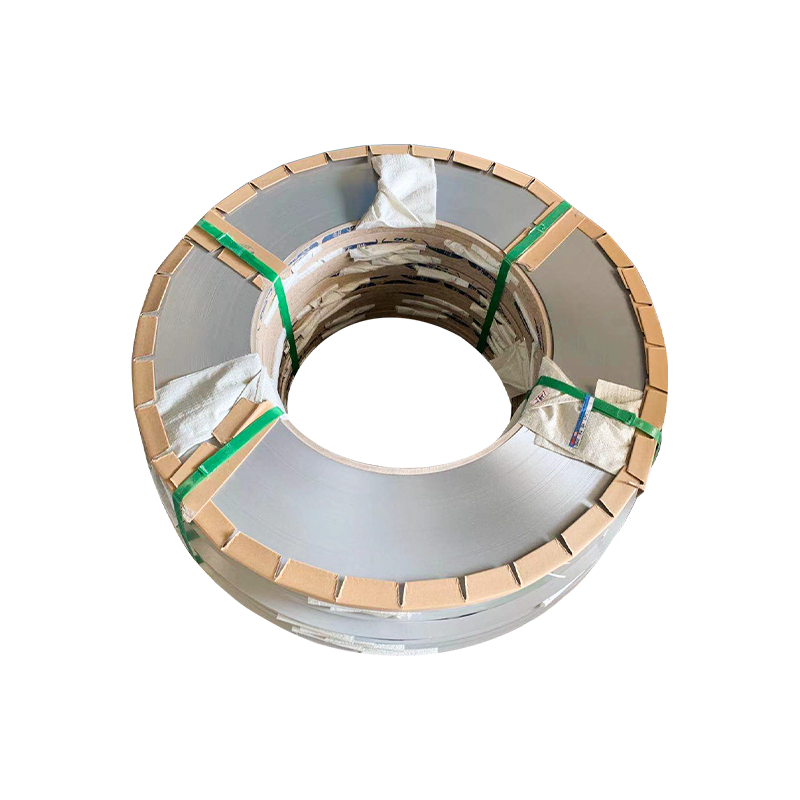
Cold working progressively increases strength through work hardening, with tensile strength reaching 600+ MPa through moderate cold reduction and exceeding 1000 MPa through aggressive rolling and forming. This extraordinary strength development enables material designers to achieve high-strength properties from solid metal without requiring expensive alloy additions or complex heat treatments. The relationship between reduction of area through cold working and resulting strength is well-established through standardized conditions including quarter-hard, half-hard, three-quarter-hard, and full-hard tempers enabling material specification matching specific strength requirements.
Elongation at break, measuring plastic deformation capability before fracture, decreases proportionally with increasing strength through cold working. Annealed material exhibits elongation exceeding 40%, enabling significant forming strain without rupture. Full-hard condition reduces elongation to approximately 5%, reflecting the dramatic strength increase achieved through progressive cold deformation. This inverse relationship necessitates careful selection of temper condition balancing required strength against formability requirements, with material specifications typically selecting tempers enabling required forming operations while achieving target strength properties.
Corrosion Resistance and Environmental Performance
301 stainless steel develops self-healing protective oxide film when exposed to atmospheric oxygen, creating corrosion resistance in mild environments including exposure to moisture, industrial atmospheres, and most freshwater applications. The chromium-rich oxide layer prevents further corrosion progression once formed, requiring only continued oxygen exposure for maintenance. This passive corrosion mechanism enables extended service life without protective coatings or maintenance in most industrial environments. However, chloride-containing environments including saltwater or de-icing salts penetrate the protective oxide film, initiating localized corrosion known as pitting that compromises material integrity.
Pitting resistance equivalent number (PREN) quantifies resistance to localized corrosion in chloride environments, calculated through alloy composition accounting for beneficial elements like molybdenum and harmful elements like carbon and sulfur. 301 stainless exhibits moderate PREN approximately 20-25, providing adequate corrosion resistance in most industrial applications but limited capability in severe marine or high-chloride environments where higher-alloyed materials like 316 or duplex stainless prove more suitable. Critical applications in coastal installations or chemical processing plants often specify higher-alloyed materials despite increased cost, recognizing that pitting initiation creates failure risks that exceed material cost savings.
Stress corrosion cracking, another localized failure mechanism, results from combined tensile stress and corrosive environment causing material rupture without bulk material loss. Austenitic stainless steel including 301 demonstrates lower susceptibility to stress corrosion cracking compared to ferritic materials in most chloride environments, though concentrated saltwater or high-temperature chloride exposure can initiate failure. Material specifications for high-stress applications in aggressive environments require careful evaluation of stress levels and environmental severity, often determining whether 301 stainless provides adequate performance or whether material upgrading or protective measures become necessary.
| Condition | Tensile Strength | Yield Strength | Elongation |
| Annealed | 210 MPa | 100 MPa | 40%+ |
| Quarter Hard | 450 MPa | 350 MPa | 20-30% |
| Half Hard | 650 MPa | 550 MPa | 10-15% |
| Full Hard | 1000+ MPa | 850+ MPa | 5% |
Manufacturing and Processing Capabilities
301 stainless steel strips are manufactured through continuous casting, hot rolling, cold rolling, and annealing operations creating material in various temper conditions and surface finishes. The initial casting process transforms molten metal into ingots or directly into strand configurations enabling efficient processing. Hot rolling reduces ingot thickness to intermediate gauges, followed by annealing restoring soft ductile properties enabling subsequent cold working. Multiple hot rolling passes progressively reduce material thickness while controlled cooling prevents recrystallization hardening material excessively.
Cold rolling applies dramatic reduction increasing strength and reducing thickness to final gauge requirements. The progressive reduction through multiple passes manages strain hardening and material quality, with intermediate annealing restoring ductility enabling continued deformation without fracture. Final annealing treatments establish desired temper condition and grain structure optimizing balance between strength and formability. Surface finishing operations including grinding, polishing, or passivation create final surface appearance and enhance corrosion resistance through removal of iron contamination and surface oxide layer optimization.
Machining and forming operations on 301 stainless require consideration of work-hardening characteristics, with cutting speeds and feeds optimized for strain-hardening behavior that can harden material surface creating difficult-to-machine subsurface. Forming operations must accommodate reduced ductility in cold-worked tempers, with springback characteristics requiring design consideration. Welding demands careful control preventing sensitization and stress-corrosion cracking in high-strength tempers, often specifying stabilized grades or stress-relief treatments following welding.
Industrial Applications and Market Uses
Precision springs represent a primary application for 301 stainless steel strips, exploiting the exceptional work-hardening response enabling high-strength spring materials with excellent corrosion resistance. The material achieves strength levels previously requiring expensive alloy steel springs while providing superior atmospheric corrosion resistance eliminating protective coatings. Automotive suspension springs, electrical connectors, and industrial fasteners increasingly employ 301 stainless, recognizing the combined advantages of strength, corrosion resistance, and cost-effectiveness compared to alternatives.
Electrical applications including transformer leads, conductor shielding, and component leads benefit from 301's non-magnetic properties eliminating electromagnetic interference. The excellent electrical conductivity combined with corrosion resistance enables reliable long-service-life connections without maintenance. Electronic equipment manufacturers employ 301 stainless for contact springs, battery terminals, and conductor shielding where reliability and corrosion resistance prove essential for equipment performance.
Architectural and decorative applications leverage 301's corrosion resistance and aesthetic appeal, with trim components, fascia, and ornamental features providing long-term service without protective coatings. The material's workability enables complex forming and shaping creating distinctive architectural elements. Marine hardware, fasteners, and structural components employ 301 in moderate-exposure environments where superior corrosion resistance compared to carbon steel justifies material cost.
Primary Applications for 301 Stainless Steel Strips
- Precision springs and spring components requiring high strength and corrosion resistance
- Electrical connectors and contact springs with non-magnetic requirements
- Automotive suspension and engine components requiring durability
- Fasteners and hardware for industrial and construction applications
- Architectural trim, fascia, and decorative components
- Medical device components requiring biocompatibility and corrosion resistance
- Battery terminals and electrical conductor applications
Comparison with Alternative Materials and Selection Criteria
301 stainless steel offers superior corrosion resistance compared to carbon steel and standard spring steel alternatives, eliminating protective coating requirements in atmospheric exposure while providing inherent long-term durability. The cost premium over carbon steel decreases proportionally with improved properties and reduced maintenance, often proving economical despite higher material cost. 304 stainless provides marginally superior corrosion resistance but exhibits reduced work-hardening response limiting maximum achievable strength, making 301 preferable where strength demands justify selection. 316 stainless with molybdenum addition provides enhanced pitting resistance in chloride environments but at substantially higher cost, requiring evaluation of environmental exposure severity to justify material upgrade.
Spring steel and alloy steel alternatives provide strength achievable through 301 cold working but require protective coatings and maintenance to prevent rust and corrosion in moist or aggressive environments. Nickel-bearing stainless alternatives including 200-series grades reduce cost through lower nickel content but exhibit reduced corrosion resistance and formability compared to 301. Material selection ultimately reflects balance between strength requirements, corrosion resistance needs, formability demands, and cost constraints, with 301 stainless representing optimal balance point for many industrial applications.
301 stainless steel strips represent a versatile, high-performance material solution enabling engineers and designers to achieve strength and corrosion resistance combinations impossible through single-material alternatives. The work-hardening capability combined with corrosion resistance addresses fundamental material challenges in industries prioritizing reliability and long-service life. As environmental concerns drive preferences toward durable materials reducing replacement frequency and protective coating needs, 301 stainless steel strips position themselves as increasingly valuable solution for demanding applications where performance reliability and environmental responsibility converge toward material selection emphasizing proven, sustainable solutions supporting long-term equipment reliability and reduced lifecycle environmental impact.
 Previous


