


 English
 русский

Content
What Makes 304L Stainless Steel Strips Different
304L stainless steel strips are a low-carbon variant of the widely used 304 austenitic stainless steel. The "L" designation stands for low carbon, meaning the carbon content is capped at around 0.03%, compared to the standard 0.08% maximum found in regular 304 grade. This seemingly small difference has a significant practical impact: it reduces the risk of carbide precipitation at grain boundaries during welding, which in turn lowers the chance of intergranular corrosion in the heat-affected zone. For manufacturers who need to weld strips into components without additional post-weld heat treatment, 304L offers a meaningful advantage over standard 304.
Strips are typically supplied in coil or cut-to-length form, with thicknesses generally ranging from 0.1mm to 3mm and widths from a few millimeters up to several hundred millimeters, depending on the intended application. Because of their corrosion resistance, formability, and weldability, 304L strips are used across industries ranging from food processing to architectural fabrication.
Key Mechanical and Chemical Properties
Understanding the composition and mechanical characteristics of 304L strips helps buyers confirm they are selecting the right material for their specific load, temperature, and corrosion requirements.
| Property | Typical Value |
| Carbon Content | ≤0.03% |
| Chromium Content | 18.0–20.0% |
| Nickel Content | 8.0–12.0% |
| Tensile Strength | ≥485 MPa |
| Yield Strength | ≥170 MPa |
| Elongation | ≥40% |
| Max Service Temperature | Up to 425°C for continuous use |
These values can vary slightly depending on the supplier and the specific standard referenced, such as ASTM A240 or EN 1.4307, so it's worth requesting a mill test certificate to confirm the exact chemical and mechanical properties of any batch before purchase.
Common Applications for 304L Strips
304L's combination of corrosion resistance, weldability, and moderate cost makes it a versatile choice across several industries.
Food and Beverage Processing
304L strips are frequently used to fabricate components for food processing equipment, including conveyor parts, tank linings, and small brackets, because the low carbon content resists sensitization from repeated washdown and sanitation cycles that involve welding or heat exposure.
Chemical and Pharmaceutical Equipment
In chemical processing environments where equipment is exposed to mild acids, alkalis, or saline conditions, 304L strips provide reliable corrosion resistance while allowing fabricators to weld assemblies without worrying about intergranular corrosion weakening joints over time.
Architectural and Decorative Fabrication
304L strips are also commonly formed into trim, handrails, and decorative panels, taking advantage of the material's clean finish, formability into thin sections, and resistance to atmospheric corrosion in both indoor and outdoor settings.
Automotive and Precision Components
Because 304L can be rolled to tight thickness tolerances, it is used for precision stamped parts, clips, and small structural elements in automotive and appliance manufacturing where consistent formability and weld integrity matter.
Finish Options and Their Practical Uses
304L strips are available in a range of surface finishes, and choosing the right one affects both appearance and functional performance.
- 2B Finish: a smooth, matte finish commonly used for general fabrication and equipment parts
- BA Finish (Bright Annealed): a reflective, mirror-like finish suited for decorative and hygienic applications
- No.4 Brushed Finish: a directional satin finish popular for architectural trim and appliance panels
- 2D Finish: a duller matte finish that offers good formability, often used before further processing
Selecting a finish depends on whether the priority is visual appeal, ease of subsequent forming, or resistance to fingerprints and staining in food-contact or medical applications.
How to Choose the Right Supplier and Specification
When sourcing 304L stainless steel strips, buyers should verify several details beyond just the grade name. Confirming the exact thickness tolerance, width tolerance, and edge condition (mill edge, slit edge, or trimmed edge) ensures the material fits directly into existing fabrication processes without unexpected rework. It is also important to request documentation confirming compliance with recognized standards such as ASTM A240, EN 10088, or JIS G4305, since these standards define the acceptable ranges for chemical composition and mechanical properties.
Buyers working on welded assemblies should specifically confirm the carbon content stays within the 304L range on the mill certificate, since some suppliers may substitute standard 304 material without clearly labeling the difference. Requesting a certificate of conformance and, where necessary, third-party testing helps avoid receiving material that does not meet the low-carbon requirement critical for welding-intensive applications.
Storage and Handling Best Practices
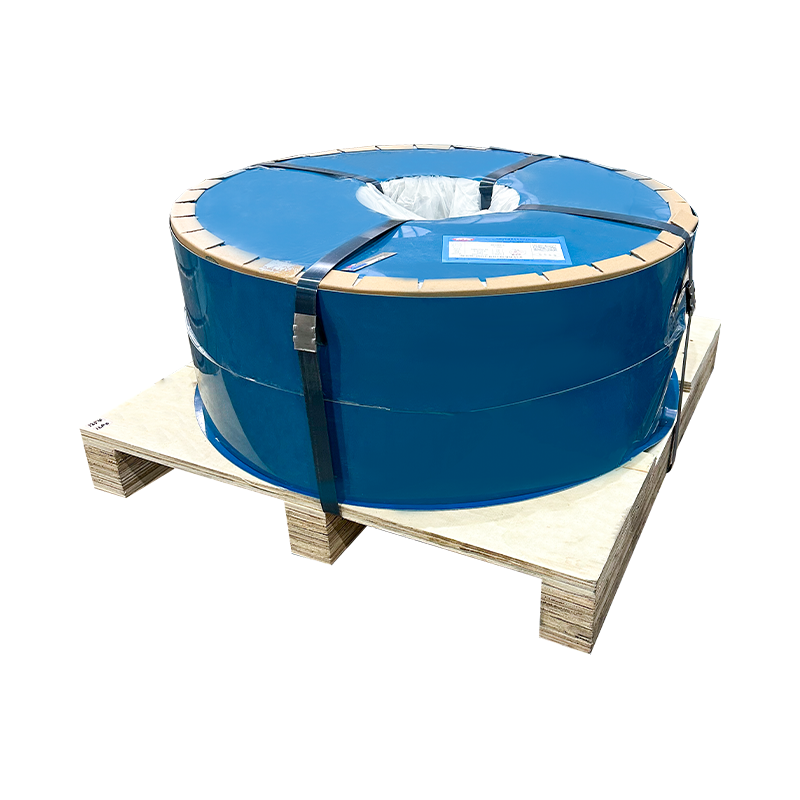
Proper storage helps preserve the surface finish and corrosion resistance of 304L strips before fabrication. Strips should be stored indoors, away from direct contact with carbon steel or other materials that could cause surface contamination and lead to rust staining. Keeping coils wrapped in protective film until use prevents scratches and fingerprints, which is particularly important for BA and brushed finishes intended for visible applications.
During handling, using clean gloves and dedicated stainless steel tools, rather than tools previously used on carbon steel, prevents cross-contamination that could introduce free iron particles onto the surface. If contamination does occur, passivation treatments can restore the protective chromium oxide layer, but preventing contamination in the first place is far more cost-effective than remediation after the fact.
 Previous


