


 English
 русский

Content
- 1 Understanding Grade 441 Stainless Steel and Its Place in Appliance Manufacturing
- 2 Chemical Composition and What Each Element Contributes
- 3 Key Mechanical Properties of Cold Rolled 441 Strip
- 4 Corrosion Resistance Performance in Coffee Maker Environments
- 5 Surface Finish Options and Their Impact on Fabrication
- 6 Standard Thickness and Width Tolerances for Coffee Maker Applications
- 7 Sourcing 441 Cold Rolled Strip: What to Verify with Suppliers
Understanding Grade 441 Stainless Steel and Its Place in Appliance Manufacturing
Grade 441 stainless steel is a titanium and niobium stabilized ferritic stainless steel that has become one of the most trusted materials in the household appliance industry, particularly for coffee makers and other kitchen equipment that must withstand repeated thermal cycling, moisture exposure, and contact with food-grade liquids. Developed as a cost-effective alternative to austenitic grades such as 304 and 316, grade 441 delivers comparable corrosion resistance in many environments while offering the advantages of a lower nickel content — a critical factor in cost stability, given how volatile nickel pricing can be on global commodity markets.
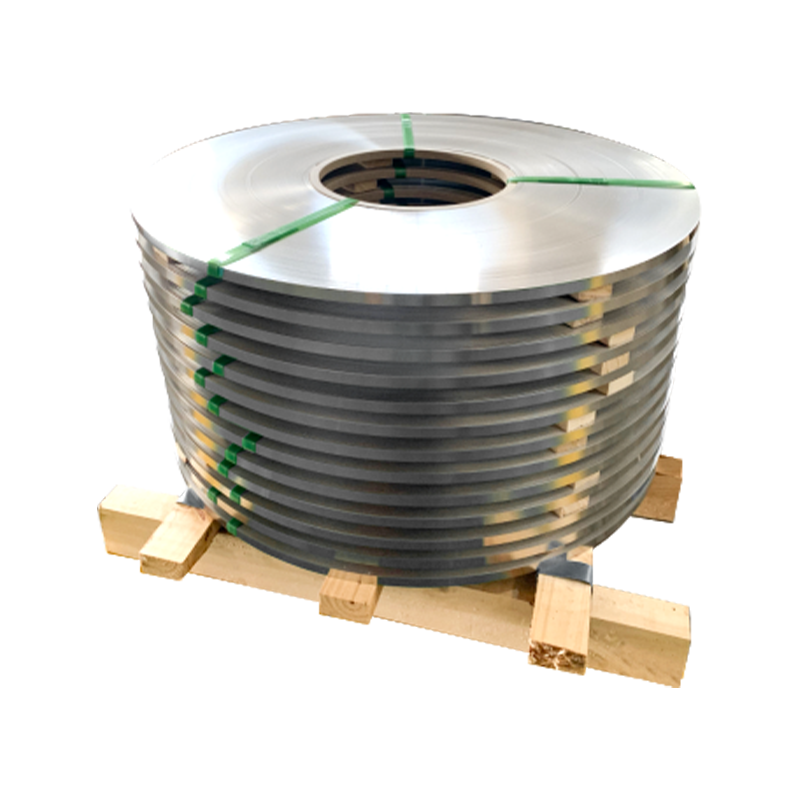
When supplied in cold rolled strip form, grade 441 achieves a dimensional precision and surface finish that makes it directly suitable for the deep drawing, stamping, and roll forming operations used to manufacture coffee maker components such as boiler shells, heating element housings, water tank liners, and internal structural panels. The cold rolling process refines the grain structure of the steel, improves mechanical consistency along the coil length, and produces the tight thickness tolerances that appliance manufacturers require for automated production lines. Understanding why grade 441 is specified for these applications — and what to look for when sourcing it — is essential knowledge for procurement engineers and product designers working in the coffee appliance sector.
Chemical Composition and What Each Element Contributes
The performance of 441 stainless steel in coffee maker applications is directly tied to its carefully balanced chemical composition. Each alloying element plays a specific role in determining corrosion resistance, mechanical behavior, weldability, and long-term stability under thermal stress.
| Element | Typical Content (%) | Role in Performance |
| Chromium (Cr) | 17.5 – 18.5 | Primary corrosion resistance via passive oxide layer |
| Titanium (Ti) | 0.10 – 0.60 | Stabilizes carbon, prevents intergranular corrosion after welding |
| Niobium (Nb) | 0.30 – 0.60 | Additional stabilization, improves high-temperature strength |
| Carbon (C) | ≤ 0.030 | Kept low to minimize carbide precipitation and sensitization |
| Nickel (Ni) | ≤ 1.00 | Minor presence; reduces material cost vs. austenitic grades |
| Manganese (Mn) | ≤ 1.00 | Improves hot workability and surface quality |
The dual stabilization with both titanium and niobium is what sets grade 441 apart from simpler ferritic grades like 430. This combination locks carbon and nitrogen into stable carbide and nitride compounds, preventing sensitization during welding and ensuring that the steel retains its corrosion resistance even after the heat exposure involved in coffee maker assembly and during repeated use cycles at brewing temperatures between 90°C and 100°C.
Key Mechanical Properties of Cold Rolled 441 Strip
The cold rolling process applied to grade 441 stainless steel strip is not simply a sizing operation — it fundamentally transforms the material's mechanical properties in ways that are highly beneficial for coffee maker component fabrication. By compressing the steel between precision rollers at room temperature, manufacturers achieve a denser grain structure, improved surface hardness, and tighter dimensional tolerances compared to hot rolled equivalents.
- Tensile Strength: Cold rolled 441 strip typically exhibits a tensile strength of 430–600 MPa, sufficient for structural components in coffee maker housings that must resist deformation under internal pressure from steam or hot water systems.
- Yield Strength: The 0.2% proof strength typically falls in the range of 260–350 MPa, providing the rigidity needed to maintain dimensional stability in formed components without excessive springback during stamping operations.
- Elongation: Despite its increased strength from cold working, grade 441 retains elongation values of 20–25%, giving it excellent formability for deep drawn parts such as cylindrical boiler shells and dome-shaped heating element covers.
- Hardness: Typical Vickers hardness values range from 170–210 HV, providing good surface wear resistance for components that experience repeated assembly contact or mechanical abrasion during the product's service life.
- Thermal Expansion: With a coefficient of thermal expansion of approximately 10.4 × 10⁻⁶/°C, grade 441 expands significantly less than austenitic grades under heat, reducing thermal fatigue stress in components that cycle between ambient and brewing temperatures hundreds of times over a product's lifetime.
Corrosion Resistance Performance in Coffee Maker Environments
Coffee makers present a demanding corrosion environment that combines hot water, dissolved mineral salts, mild organic acids from coffee extraction, steam, and frequent wet-dry cycling. The passive chromium oxide film that forms naturally on the surface of grade 441 stainless steel provides effective protection against all of these factors under normal operating conditions. The film is self-repairing — if scratched or abraded, it reforms spontaneously in the presence of oxygen, maintaining protection without any maintenance requirement.
Resistance to Scale and Mineral Deposits
One of the most common failure mechanisms in coffee maker components is localized corrosion beneath limescale deposits, which create oxygen-depleted crevice environments that can attack less resistant steels. Grade 441's high chromium content and stabilized microstructure give it substantially better resistance to this type of under-deposit corrosion compared to unstabilized grades like 430. In long-term field testing and accelerated corrosion studies, 441 performs comparably to grade 304 in the water contact and steam exposure conditions typical of domestic coffee appliances.
Weld Zone Corrosion Resistance
Many coffee maker components involve laser welding or TIG welding during assembly. In unstabilized ferritic steels, the heat affected zone (HAZ) adjacent to a weld becomes sensitized — chromium carbides precipitate at grain boundaries, depleting the surrounding matrix of chromium and creating pathways for corrosion attack. The titanium and niobium stabilization in grade 441 prevents this sensitization, ensuring that welded joints maintain corrosion resistance equivalent to the base metal. This is a critical advantage for coffee maker manufacturers who rely on welded boiler assemblies and water pathway components.
Surface Finish Options and Their Impact on Fabrication
Cold rolled 441 stainless steel strip is available in several standard surface finish designations, each suited to different downstream processing requirements. The finish selected affects not only the visual appearance of the final component but also its formability, the friction characteristics during stamping, and the ease of cleaning during both manufacturing and end use.
- 2B Finish: The most common finish for cold rolled strip used in appliance manufacturing. It has a smooth, moderately reflective surface produced by cold rolling followed by annealing and light skin-pass rolling. The 2B finish offers the best combination of formability, corrosion resistance, and consistent surface appearance for high-volume stamping applications.
- 2D Finish: A dull, matte finish produced without the final skin pass. It has lower reflectivity than 2B but slightly better lubricant retention during deep drawing operations, making it preferred for complex forming processes where galling or surface pickup is a concern.
- BA (Bright Annealed) Finish: A highly reflective, mirror-like finish produced by annealing in a controlled atmosphere. BA finish is used where the stainless steel surface will be visible in the final product and a premium aesthetic is required, such as for exposed outer panels or decorative interior components of high-end coffee machines.
Standard Thickness and Width Tolerances for Coffee Maker Applications
Dimensional precision is a non-negotiable requirement when sourcing cold rolled 441 strip for automated coffee maker production lines. Thickness variation along a coil or between coils directly affects the consistency of formed parts, the accuracy of assembly tolerances, and the performance of welded joints. Most appliance manufacturers specify strip thickness in the range of 0.4 mm to 1.5 mm for internal components, with tighter tolerances required for boiler and pressure-related parts.
Standard international tolerances for cold rolled stainless strip are governed by specifications such as EN 10259 (Europe) and ASTM A240/A480 (USA). For precision appliance applications, buyers often specify tighter-than-standard tolerances — typically ±0.02 mm to ±0.05 mm on thickness — which premium strip mills can achieve through multi-pass cold rolling with in-line gauge control systems. Width tolerances for slit strip typically run from ±0.1 mm to ±0.3 mm depending on width and gauge. Always confirm the tolerance class with the supplier and request mill test certificates (MTCs) that document actual measured dimensions from each production coil.
Sourcing 441 Cold Rolled Strip: What to Verify with Suppliers
Purchasing 441 cold rolled stainless steel strip for coffee maker production requires more than simply matching a grade designation. The same nominal grade can vary significantly in actual composition, surface quality, and dimensional consistency depending on the origin mill and the quality management systems in place. Verifying these factors before committing to a supplier protects both product quality and production efficiency.
- Mill Test Certificates (EN 10204 3.1 or 3.2): Always require a 3.1 certificate — issued by the manufacturer — that documents the actual chemical composition and mechanical test results for each heat lot. For critical applications, a 3.2 certificate with independent third-party verification provides an additional layer of assurance.
- Origin Traceability: Confirm the producing mill and country of origin. Premium quality 441 strip is produced by established mills in Europe, Japan, South Korea, and Taiwan, where process controls and quality management systems are well documented. Be cautious of material offered without clear mill traceability.
- Food Contact Compliance: For components that will contact water or beverages, verify compliance with relevant food safety regulations such as EU Regulation 10/2011 on plastic materials (for reference framing), or applicable national standards for metallic materials in contact with drinking water.
- Coil Packaging and Transit Protection: Cold rolled strip is susceptible to surface damage and moisture-induced staining during shipping. Specify interleaving paper, moisture-barrier wrapping, and appropriate coil end protection to ensure the material arrives in production-ready condition.
- Sample Testing Before Full Order: Request sample coils for internal forming trials, corrosion testing, and dimensional verification before placing full production orders. This is standard practice among professional appliance manufacturers and provides the empirical data needed to confirm that a new supply source meets all process requirements.
 Previous


