


 English
 русский

Content
- 1 Understanding the Role of Textile Reeds in Weaving Operations
- 2 What Is 301 Stainless Steel and How Does Cold Rolling Define Its Properties
- 3 Key Mechanical Properties That Make 301 Strip Suitable for Reed Dents
- 4 Surface Finish Requirements for Textile Reed Strip
- 5 Dimensional Tolerances and Why They Matter for Reed Manufacturing
- 6 Corrosion Resistance Advantages in Textile Mill Environments
- 7 Sourcing and Supplier Evaluation Criteria for Reed-Grade Strip
- 8 Practical Recommendations for Reed Manufacturers Specifying 301 Strip
Understanding the Role of Textile Reeds in Weaving Operations
In the weaving industry, the reed is one of the most mechanically demanding components of a loom. It serves two critical functions simultaneously: guiding the warp yarns through evenly spaced dents to maintain consistent fabric width, and beating the weft yarn firmly into position after each pass of the shuttle or rapier. Every single weaving cycle subjects the reed to repetitive impact, lateral stress, and constant contact with yarn — sometimes at speeds exceeding 1,000 picks per minute on modern high-speed looms. Given this operating environment, the material used to manufacture reed dents must meet a precise and demanding set of mechanical and surface quality requirements. This is exactly where 301 cold rolled stainless steel strip has established itself as the dominant material of choice across the global textile machinery industry.
What Is 301 Stainless Steel and How Does Cold Rolling Define Its Properties
Grade 301 is an austenitic stainless steel alloy with a nominal composition of approximately 16–18% chromium and 6–8% nickel, alongside controlled amounts of carbon, manganese, silicon, phosphorus, and sulfur. Compared to the more commonly referenced grade 304, the 301 alloy contains slightly less chromium and nickel but a higher maximum carbon content. This compositional difference makes 301 significantly more responsive to work hardening — the process by which the material strengthens as it is mechanically deformed during cold rolling.
Cold rolling is the manufacturing process that transforms hot-rolled stainless steel coils into thin, precise strips by passing the material through a series of rolling mills at room temperature. Unlike hot rolling, which is performed above the material's recrystallization temperature, cold rolling deforms the steel's grain structure without allowing it to reanneal. This produces several important changes in the material's properties: tensile strength and yield strength increase substantially, dimensional tolerances become very tight, and the surface finish improves dramatically. For textile reed applications, all three of these outcomes are directly beneficial and operationally critical.
Key Mechanical Properties That Make 301 Strip Suitable for Reed Dents
The mechanical performance of 301 cold rolled stainless steel strip varies considerably depending on the temper condition — that is, how much cold work has been applied during the rolling process. Strip for textile reed applications is typically supplied in the 1/4 hard, 1/2 hard, 3/4 hard, or full hard temper, each corresponding to progressively higher strength and lower ductility levels. The selection of temper depends on the specific reed design, dent cross-section geometry, and loom operating speed.
| Temper Condition | Tensile Strength (MPa) | Yield Strength (MPa) | Typical Reed Application |
| Annealed | 515–690 | 205–310 | Low-speed or specialty looms |
| 1/4 Hard | 760–930 | 515–655 | Standard weaving reeds |
| 1/2 Hard | 930–1100 | 690–860 | High-speed rapier and airjet looms |
| 3/4 Hard | 1100–1275 | 860–1030 | Heavy-duty industrial weaving |
| Full Hard | 1275+ | 1030+ | Ultra-high-speed or abrasive yarn applications |
The combination of high tensile strength and good spring-back characteristics in harder temper conditions means that individual reed dents can withstand thousands of beating cycles without permanent deformation. Elastic recovery — the ability of the steel to return to its original shape after being stressed — is especially important in the reed context, where dents must maintain their precise spacing and geometry throughout the operational life of the reed.
Surface Finish Requirements for Textile Reed Strip
Surface quality is not a secondary concern for textile reed strip — it is arguably as important as the mechanical properties themselves. Reed dents are in constant contact with warp yarns, and any surface defect, roughness, or sharp edge on the dent can cause yarn abrasion, fiber breakage, or excessive lint accumulation. These problems translate directly into fabric defects, increased machine downtime, and higher yarn consumption costs for the weaving mill.
Standard Surface Finish Grades
Cold rolled 301 stainless steel strip for reed applications is typically produced in a 2B or BA (bright annealed) surface finish. The 2B finish is achieved by cold rolling followed by annealing and skin passing, resulting in a smooth, slightly reflective surface with a surface roughness (Ra) typically in the range of 0.1 to 0.5 micrometers. The BA finish involves bright annealing in a controlled atmosphere furnace, producing an even smoother, more reflective surface that further reduces the risk of yarn abrasion. For the most demanding reed applications — particularly those involving fine denier filament yarns or technical fiber types — BA finish strip is strongly preferred.
Edge Condition and Burr Control
The edge condition of the slit strip is equally critical. When stainless steel coils are slit to the precise widths required for reed dent blanks, the slitting process can introduce burrs along the cut edges. Any burr that remains on the finished dent edge will contact yarn and cause immediate damage. Reputable suppliers of textile reed strip invest in precision slitting equipment with tightly maintained blade clearances and regularly inspect edge quality to ensure burr height remains within acceptable limits — typically below 10% of the material thickness.
Dimensional Tolerances and Why They Matter for Reed Manufacturing
Reed manufacturers work to extremely tight dimensional specifications because the spacing of dents across the reed width determines the fabric's pick density and uniformity. If the strip used to make dents varies in thickness or width, the assembled reed will have inconsistent dent spacing, producing visible streaks or density variations in the finished fabric. This is why dimensional tolerance control during the cold rolling process is so critical for textile-grade 301 strip.
- Thickness tolerance: For strip in the 0.10mm to 0.50mm range typical for reed dents, thickness tolerances of ±0.005mm to ±0.010mm are standard requirements from reed manufacturers.
- Width tolerance: Slit strip width tolerances of ±0.05mm or better are required to ensure consistent dent geometry after forming.
- Flatness and camber: Strip must be supplied with minimal camber (lateral bow) and good flatness to feed correctly through automated dent-forming and reed-assembly equipment without misalignment.
- Coil set: Excessive coil set — the tendency of strip to retain curvature from being wound on a coil — must be controlled to prevent feeding problems during high-speed stamping or forming operations.
Corrosion Resistance Advantages in Textile Mill Environments
Textile mills are not sterile environments. Depending on the fiber being processed, weaving areas may be exposed to sizing agents, lubricants, moisture, and in some cases, mildly acidic or alkaline atmospheric conditions. Carbon steel, which was historically used for some reed applications, corrodes readily in these conditions, leading to rust staining on yarns and fabric, accelerated wear, and shortened reed service life.
The chromium content in 301 stainless steel forms a passive oxide layer on the surface that provides effective protection against the corrosion conditions typically encountered in textile mill environments. While 301 offers slightly less corrosion resistance than grade 304 due to its lower chromium and nickel content, it performs entirely adequately in standard textile applications and significantly outperforms any carbon steel alternative. In particularly aggressive environments — such as mills processing wool with acidic scouring agents or operations in high-humidity coastal regions — upgrading to 304 strip may be warranted, but for the vast majority of textile reed applications, 301 provides a practical and cost-effective level of corrosion protection.
Sourcing and Supplier Evaluation Criteria for Reed-Grade Strip
Not all 301 cold rolled stainless steel strip is produced to the quality level required for textile reed manufacturing. The industry's dimensional, surface, and mechanical requirements are more stringent than those for many other cold rolled strip applications, and sourcing from suppliers without specific experience in precision reed strip can result in quality problems that are difficult to detect until the strip has already been processed into finished reeds.
Mill Certification and Material Traceability
Any credible supplier of textile reed strip should be able to provide mill test certificates (MTCs) for each coil or batch, confirming the chemical composition, mechanical properties by temper, and surface finish specification. Full material traceability — the ability to trace a delivered coil back to its specific melting and rolling records — is standard practice among quality-conscious stainless steel producers and should be treated as a baseline requirement rather than an optional extra.
Consistency Across Batches
Reed manufacturers run continuous production and cannot afford significant batch-to-batch variation in their incoming strip material. Evaluating a potential supplier's process capability data — specifically their demonstrated ability to hold thickness, width, and hardness within specification across multiple production runs — is a more reliable indicator of long-term suitability than a single sample evaluation. Request statistical process control (SPC) data or capability indices (Cpk values) from shortlisted suppliers to objectively compare process consistency.
Packaging and Coil Handling
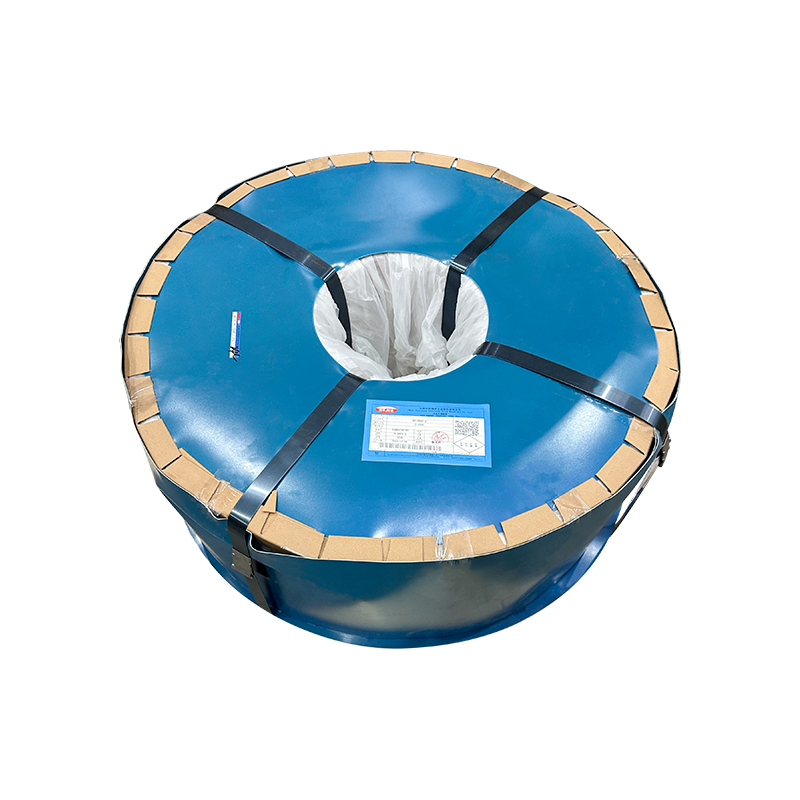
Precision cold rolled strip is susceptible to surface damage during handling and transit. Suppliers experienced in the textile reed market understand that strip must be carefully interleaved with protective paper, wound to consistent tension on properly sized coil mandrels, and packaged to prevent moisture ingress during storage and shipping. Poor packaging that allows surface contact, edge damage, or rust staining during transit undermines all the care taken in the rolling and slitting process.
Practical Recommendations for Reed Manufacturers Specifying 301 Strip
For reed manufacturers looking to standardize or improve their incoming material specifications, the following practical recommendations reflect the requirements of leading reed producers in established textile machinery markets.
- Specify temper condition precisely based on your dent design and target loom speed category, rather than accepting whatever temper is most readily available from a given supplier.
- Require BA surface finish for all fine-yarn reed applications and verify surface roughness with Ra measurement rather than relying solely on visual inspection.
- Include edge burr height limits explicitly in your purchase specification and require supplier confirmation of slitting equipment maintenance schedules.
- Conduct incoming inspection of thickness and hardness on every coil receipt, using calibrated micrometers and hardness testers, rather than relying exclusively on the supplier's MTC values.
- Maintain a preferred supplier list based on demonstrated batch-to-batch consistency data rather than unit price alone, as material variability costs far exceed any savings from cheaper but inconsistent strip.
- Communicate your specific end-use application details to your strip supplier so they can advise on any process adjustments — such as skin pass reduction ratio or annealing atmosphere — that could optimize the strip for your particular forming and assembly process.
The relationship between material quality and reed performance is direct and measurable. Investing in well-specified, consistently produced 301 cold rolled stainless steel strip from a qualified supplier is not simply a materials procurement decision — it is a fundamental input into the quality, productivity, and competitiveness of the entire weaving operation that the reed ultimately serves.
 Previous


