


 English
 русский

Content
- 1 What Polishing Stainless Steel Actually Means
- 2 Step-by-Step: How to Polish Stainless Steel Strip
- 3 Choosing the Right Abrasive for 201 Stainless Steel
- 4 Surface Finish Standards for Corrugated Pipe Applications
- 5 Common Polishing Mistakes and How to Avoid Them
- 6 Why Material Quality Determines Polishing Outcome
What Polishing Stainless Steel Actually Means
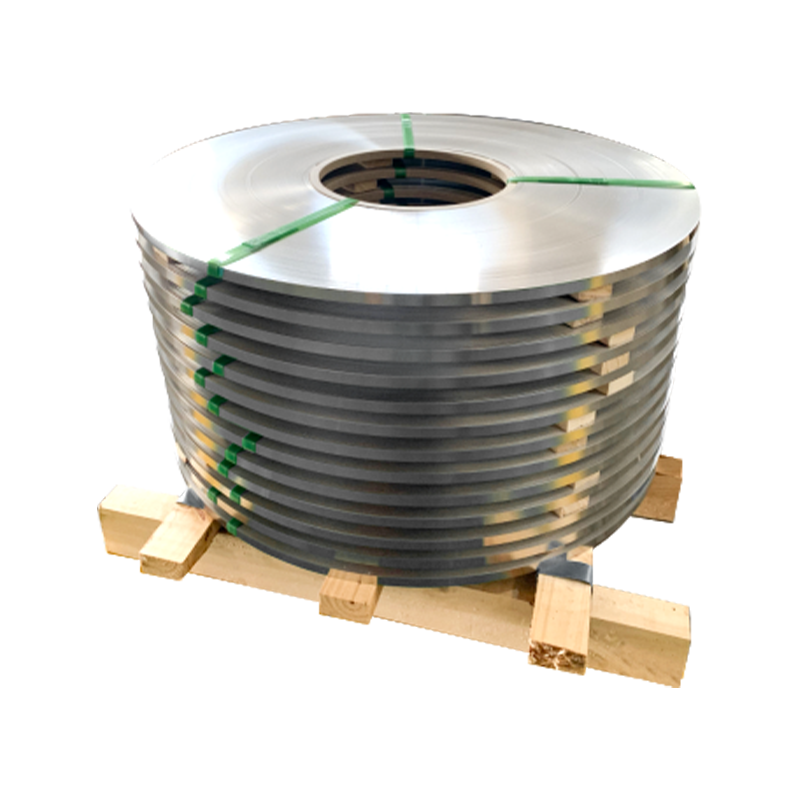
Polishing stainless steel is more than a cosmetic step — it directly affects corrosion resistance, surface cleanliness, and long-term performance. When stainless steel is cold rolled into strip form, such as 201 cold rolled stainless steel strip used in corrugated pipe manufacturing, the surface condition leaving the mill already determines how well the material will respond to further finishing. Understanding what polishing achieves helps you match the process to your application requirements.
At its core, polishing removes surface irregularities — microscopic peaks and valleys left behind by rolling, slitting, or forming. These imperfections can trap moisture, harbor bacteria, or create stress concentration points that weaken the material under cyclic load. For corrugated pipe applications, where the strip is shaped into wave-form profiles and often exposed to fluid, soil pressure, or chemical environments, a well-polished surface is not optional — it is a functional requirement.
Polishing is typically categorized by the final surface finish designation: from a basic No. 1 hot-rolled finish all the way to mirror-bright No. 8. For 201 stainless steel strip used in structural or industrial corrugated pipe, finishes ranging from No. 2B to No. 4 are most common, balancing reflectivity, smoothness, and cost-effectiveness.
Step-by-Step: How to Polish Stainless Steel Strip
Whether you are finishing a cold rolled 201 stainless steel strip in-house or preparing a corrugated pipe for installation, the process follows a consistent sequence. Skipping steps or using incorrect abrasives will leave visible scratches or create surface contamination that undermines corrosion resistance.
Step 1 – Clean the Surface First
Before any abrasive work begins, remove oils, grease, and metal particles using a degreaser or acetone wipe. Polishing over contaminated surfaces embeds particles into the finish and creates microscopic pitting. This is especially important for 201 strip, which has slightly lower nickel content than 304 and is therefore more sensitive to embedded iron particles that can accelerate rust staining.
Step 2 – Start with the Right Grit
Match your starting grit to the existing surface condition. For cold rolled 201 strip arriving with a 2B mill finish (the most common delivery condition), starting with 180–220 grit aluminum oxide or zirconia abrasive belts is appropriate. For heavily scratched or welded sections, begin at 80–120 grit and work progressively finer. Never jump more than one grit increment — doing so leaves deep scratches that the finer grit cannot remove efficiently.
Step 3 – Work in a Consistent Direction
Always polish in one direction, following the existing grain of the stainless steel. Cross-grain polishing creates a crisscross scratch pattern that becomes increasingly difficult to remove. For strip material destined for corrugated pipe, the rolling direction is longitudinal, so polishing strokes should run along the strip length. Use consistent pressure and speed — uneven pressure creates wave marks visible under raking light.
Step 4 – Progress Through Finer Grits
Move through grit stages systematically. A typical progression for achieving a No. 4 finish (the most common specification for visible corrugated stainless steel surfaces) looks like this:
- 80 or 120 grit — heavy material removal, weld seam leveling
- 180 grit — intermediate smoothing
- 220 grit — pre-finishing
- 320 grit — fine scratch removal
- 400+ grit or Scotch-Brite pad — final No. 4 brushed finish
Each stage should fully eliminate the scratches from the previous stage before you advance. Inspect under good lighting between steps — what looks acceptable under overhead fluorescent light may reveal deep scratches under a side-angle LED lamp.
Step 5 – Passivate After Polishing
Polishing disrupts the passive chromium oxide layer that gives stainless steel its corrosion resistance. After mechanical polishing, allow the surface to passivate naturally by exposure to air for 24–48 hours, or accelerate passivation with a citric acid or nitric acid treatment. For 201 stainless steel, which relies more heavily on manganese substitution for nickel and has a less robust passive film than 304 or 316, passivation is especially important in humid or chemically aggressive environments.
Choosing the Right Abrasive for 201 Stainless Steel
Not all abrasives perform equally on 201 cold rolled stainless steel strip. The alloy's composition — typically 16–18% chromium, 3.5–5.5% manganese, and 1–1.5% nickel — makes it harder than some 300-series grades at equivalent temper, and it work-hardens slightly faster. This means the abrasive must cut efficiently without glazing over.
| Abrasive Type | Best Use | Grit Range | Notes |
|---|---|---|---|
| Aluminum Oxide | General grinding and intermediate polish | 80–320 | Cost-effective, widely available |
| Zirconia Alumina | Heavy stock removal | 36–120 | Self-sharpening, ideal for work-hardening alloys |
| Ceramic Alumina | High-speed belt polishing | 60–220 | Long belt life, consistent cut rate |
| Non-Woven Abrasive (Scotch-Brite) | Final brushed finish | Fine / Very Fine | Achieves uniform No. 4 directional texture |
Avoid silicon carbide abrasives for stainless steel — they are prone to embedding particles in the surface and can reduce corrosion resistance. Also avoid using any abrasive previously used on carbon steel, as cross-contamination introduces free iron that will rust on the stainless surface within days.
Surface Finish Standards for Corrugated Pipe Applications
When 201 cold rolled stainless steel strip is used to manufacture corrugated pipe, the surface finish specification depends on the pipe's end use. Different applications place very different demands on the surface:
- Underground drainage pipe: A 2B or No. 1 finish is typically sufficient. The buried environment limits visual requirements, and the corrugated profile provides mechanical strength regardless of surface texture.
- Flexible exhaust bellows and expansion joints: A No. 2B or bright-annealed finish is preferred, as the pipe flexes repeatedly under thermal cycling and a smoother surface reduces fatigue crack initiation at the corrugation roots.
- Decorative architectural corrugated panels or exposed cladding: A No. 4 brushed finish is standard, with some applications requiring No. 6 or No. 8 mirror finish for premium aesthetics.
- Food-grade or hygienic corrugated tubing: A No. 4 finish is the minimum, with Ra (average roughness) values typically specified below 0.8 µm to prevent bacterial adhesion.
It is important to note that corrugation forming itself introduces work hardening and surface stress into the strip. If polishing is required after corrugation (for weld seam blending or surface repair), the access geometry becomes constrained and manual or rotary tools must be used carefully to avoid distorting the corrugation profile.
Common Polishing Mistakes and How to Avoid Them
Even experienced fabricators make errors when polishing stainless steel strip, and these mistakes are more damaging with 201 grade than with higher-nickel alloys because the passive film is less self-repairing. Here are the most frequent problems and their solutions:
- Cross-contamination from carbon steel tools: Keep all wire brushes, grinding discs, and polishing belts dedicated to stainless steel only. Label them clearly. Free iron embedded from carbon steel tools will cause surface rust within 24–72 hours, even on correctly specified 201 strip.
- Overheating the surface: Excessive grinding speed or pressure generates heat that can cause heat tinting (rainbow discoloration) and locally alter the alloy's microstructure. Use moderate speed, keep belts moving, and allow cooling between passes.
- Skipping grit stages: Jumping from 120 grit directly to 320 grit leaves deep scratches that appear polished under normal lighting but become obvious under inspection. Each stage must fully eliminate the previous scratch pattern.
- Polishing without pre-cleaning: Grinding dust and oil residue act as lapping compound, embedding into the surface and degrading both appearance and corrosion resistance. Always degrease before and between polishing stages.
- Ignoring directionality: Random orbital or multidirectional polishing creates a swirl pattern that is very difficult to eliminate. Always maintain a consistent linear direction aligned with the strip's rolling grain.
Why Material Quality Determines Polishing Outcome
No polishing process can fully compensate for inconsistent base material. When sourcing 201 cold rolled stainless steel strip for corrugated pipe, the incoming material quality has a direct and measurable impact on how well the surface can be polished and how it performs in service.
Key material quality indicators that affect polishing outcomes include:
- Surface cleanliness from the mill: Cold rolled 201 strip with a consistent 2B finish (bright, smooth, slightly reflective) requires less preparation work before final polishing than strip with a rough, uneven 2D finish.
- Thickness tolerance consistency: Strip with tight thickness tolerances (typically ±0.05 mm for cold rolled 201 in corrugated pipe grades) ensures uniform contact during polishing. Thickness variation creates high and low spots that polish unevenly.
- Edge condition: Slit edges that are clean and burr-free prevent edge tearing during polishing and eliminate the need for secondary edge deburring before surface work begins.
- Chemical composition consistency: In-spec 201 material with stable chromium and manganese levels forms a predictable passive film after polishing. Off-spec chemistry produces variable corrosion resistance that is invisible to the eye but apparent in service.
Specifying material to a recognized standard — such as ASTM A240 or EN 10088-2 — and requesting mill test certificates with each coil shipment ensures the strip entering your polishing process is consistently within the compositional and dimensional range needed for reliable corrugated pipe performance. Starting with quality 201 cold rolled strip is the single most effective action you can take to improve polishing results and reduce rework costs.
 Previous


