


 English
 русский

Content
- 1 What Is 309S Stainless Steel and How Does It Differ from Other Grades?
- 2 Chemical Composition of 309S and Its Role in Performance
- 3 Why Cold Rolling Is the Required Processing Route for Braid Strip
- 4 Mechanical Properties of 309S Cold Rolled Strip for Braid Applications
- 5 Braid Tube Applications Where 309S Strip Is Specified
- 6 Key Specification Requirements When Sourcing 309S Cold Rolled Strip
What Is 309S Stainless Steel and How Does It Differ from Other Grades?
309S is an austenitic stainless steel grade defined by its high chromium and nickel content — nominally 22–24% chromium and 12–15% nickel — combined with a carbon content restricted to a maximum of 0.08%. The "S" suffix in 309S designates the low-carbon variant of the 309 grade family, which distinguishes it from standard 309 (maximum 0.20% carbon). The reduced carbon content of 309S is a critical specification detail for applications involving prolonged exposure to elevated temperatures or welding operations, because it minimizes the risk of sensitization — a phenomenon in which chromium carbides precipitate at grain boundaries when the steel is heated in the 425–870°C range, depleting chromium from the adjacent matrix and reducing corrosion resistance.
Compared to the ubiquitous 304 and 316 grades that dominate general stainless steel usage, 309S offers substantially superior high-temperature performance. While 304 is typically recommended for continuous service up to approximately 870°C and 316 up to 925°C in oxidizing atmospheres, 309S maintains its oxidation resistance and structural integrity in continuous service up to 1,095°C and intermittent service up to 1,150°C. This exceptional heat resistance, combined with adequate aqueous corrosion resistance for most non-halide environments, positions 309S as a high-performance engineering material for demanding thermal applications — including the production of braided flexible hose and tube assemblies where the strip must survive both the forming process and the end-use thermal environment.
Chemical Composition of 309S and Its Role in Performance
Every property that makes 309S cold rolled strip suitable for braid tube applications can be traced back to its chemical composition. Understanding what each alloying element contributes clarifies why 309S outperforms lower-alloy grades in high-temperature flexible hose service.
| Element | Content (wt%) | Primary Function in 309S |
| Chromium (Cr) | 22.00–24.00% | Forms protective Cr₂O₃ scale; primary oxidation resistance |
| Nickel (Ni) | 12.00–15.00% | Stabilizes austenite; improves high-temperature ductility and toughness |
| Carbon (C) | ≤ 0.08% | Low carbon prevents sensitization during welding and high-temp exposure |
| Manganese (Mn) | ≤ 2.00% | Austenite stabilizer; deoxidizer during melting |
| Silicon (Si) | ≤ 1.00% | Enhances oxidation resistance; improves scale adhesion at elevated temperature |
| Phosphorus (P) | ≤ 0.045% | Restricted impurity; reduces hot workability if excessive |
| Sulfur (S) | ≤ 0.030% | Restricted impurity; controlled to maintain weldability and surface quality |
The elevated chromium content of 309S — approximately 22–24% versus 18% in 304 — thickens and stabilizes the chromium oxide protective scale that forms on the steel surface at high temperatures. This denser scale is more adherent, less prone to spalling during thermal cycling, and remains protective at temperatures where the thinner scale on 304 or 316 would break down and allow rapid oxidation of the base metal. The higher nickel content (12–15% versus 8–10% in 304) suppresses the austenite-to-martensite transformation that can occur in lower-nickel grades during severe forming operations or thermal cycling, ensuring that the cold rolled strip retains the ductility and toughness of the austenitic structure throughout its service life in braided hose assemblies.
Why Cold Rolling Is the Required Processing Route for Braid Strip
The production of 309S strip for braid tube applications requires cold rolling rather than hot rolling because the dimensional and surface requirements of braided hose wire and strip cannot be achieved by hot rolling alone. Cold rolling is a metalworking process in which the steel strip is passed through precision rolling mills at room temperature — below the recrystallization temperature of the alloy — causing plastic deformation that simultaneously reduces thickness and work-hardens the material.
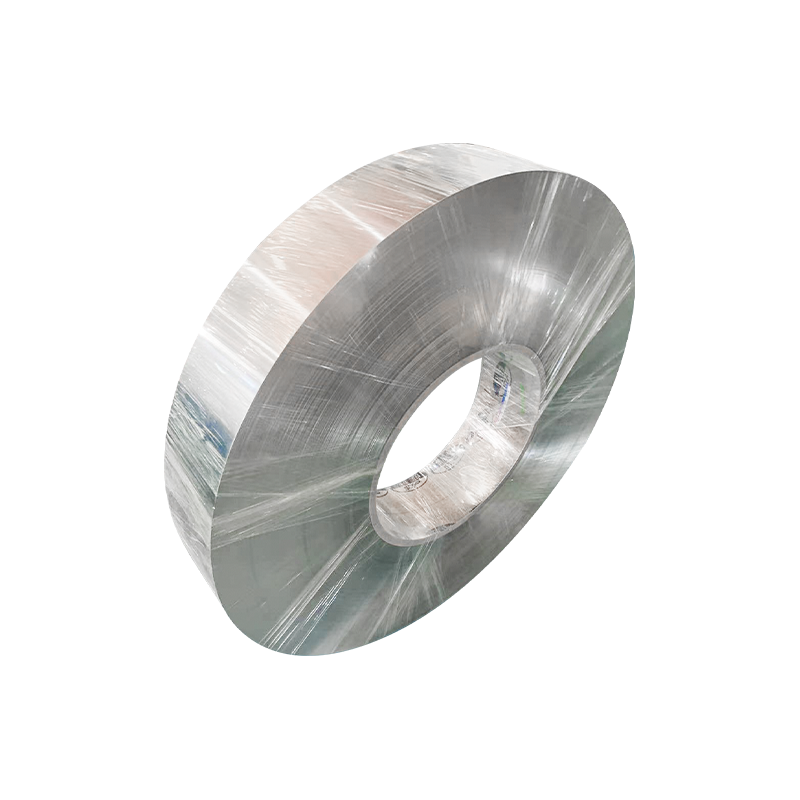
For braid tube applications, cold rolled 309S strip is typically produced in thicknesses ranging from 0.05 mm to 0.5 mm and widths from 3 mm to 300 mm, depending on the braid geometry and hose diameter. These extremely tight thickness tolerances — commonly held to ±0.005 mm or better on precision strip — are achievable only through cold rolling with carefully controlled inter-pass annealing cycles. The cold rolling process also produces the smooth, consistent surface finish (typically Ra 0.2–0.8 µm) that is essential for reliable die drawing of the strip into round wire profiles used in some braid constructions, and for preventing surface defects that would act as stress concentration sites during the repeated bending deformation of braiding.
Work Hardening and Temper Conditions
Cold rolling work-hardens austenitic stainless steel significantly. 309S cold rolled strip is supplied in several temper conditions that represent different degrees of cold work, each with distinct mechanical property profiles suited to different stages of the braid tube manufacturing process. Fully annealed strip (solution annealed at 1,050–1,120°C and water quenched) has the highest ductility and lowest yield strength, making it ideal for deep drawing or severe forming operations. Quarter-hard, half-hard, and full-hard tempers produced by controlled amounts of cold reduction offer progressively higher yield and tensile strength with reduced elongation — temper selection depends on the specific forming requirements of the braiding machinery and the mechanical strength requirements of the finished braid structure.
Mechanical Properties of 309S Cold Rolled Strip for Braid Applications
The mechanical properties of 309S cold rolled strip vary with temper condition and thickness, but the following values represent typical properties for annealed strip in the thickness range most commonly used for braid tube manufacturing:
| Property | Typical Value (Annealed) | Test Standard |
| Tensile Strength (UTS) | ≥ 515 MPa | ASTM A240 / EN 10088-2 |
| Yield Strength (0.2% proof) | ≥ 205 MPa | ASTM A240 / EN 10088-2 |
| Elongation (50 mm gauge) | ≥ 40% | ASTM A240 |
| Hardness | ≤ 217 HB / ≤ 95 HRB | ASTM A240 |
| Modulus of Elasticity | ~200 GPa | General austenitic SS |
| Max. Continuous Service Temp. | 1,095°C (oxidizing atmosphere) | ASTM A276 guidance |
The high elongation value of annealed 309S strip — 40% minimum — is particularly important for braid tube manufacturing. The braiding process subjects the strip or wire to repeated bending, interlacing, and tension cycling as it is woven around the inner hose core. A material with insufficient elongation would crack or fracture at the interlacing crossover points under these repeated bending deformations. The austenitic microstructure of 309S, with its face-centered cubic crystal structure, provides the multiple slip systems necessary for the material to accommodate this complex plastic deformation without brittle failure.
Braid Tube Applications Where 309S Strip Is Specified
The combination of high-temperature oxidation resistance, aqueous corrosion resistance, and the ductility needed to survive braiding and flexure makes 309S cold rolled strip the material of choice for several demanding braid tube application categories. Understanding the end-use context of each application clarifies why the specific properties of 309S are required rather than a lower-alloy alternative.
- Exhaust flexible connectors: Automotive and heavy vehicle exhaust systems require flexible braided hose sections at manifold connections and between fixed exhaust components to absorb engine movement, thermal expansion, and vibration without fatigue cracking. These connectors operate in exhaust gas temperatures from 600°C to over 900°C depending on engine load conditions. The braid layer — typically 309S or 321 strip — must retain its mechanical properties and oxidation resistance throughout a service life of 150,000 km or more, cycling through hundreds of thousands of thermal expansions and contractions.
- Industrial high-temperature flexible hose: Process piping in petrochemical plants, power generation facilities, and industrial furnace systems requires flexible hose sections that can carry high-temperature gases, steam, or process fluids while accommodating equipment vibration and thermal movement. Braided 309S hose assemblies in these applications may operate continuously at 800–1,000°C with internal pressures up to 20 bar or higher, depending on the inner liner and braid design specification.
- Furnace component connections: Industrial furnaces, kilns, and heat treatment equipment use braided stainless steel hose to connect burner manifolds, gas supply lines, and atmosphere circulation systems. The intense radiant heat environment of furnace interiors demands the highest available oxidation resistance in a flexible connection material, and 309S is the minimum grade typically specified for continuous furnace service above 900°C.
- Aerospace and gas turbine applications: Fuel supply, bleed air, and cooling air flexible lines in aircraft engines and auxiliary power units require braided hose that combines high-temperature resistance with the lightweight and flexibility demanded by aerospace assembly requirements. 309S strip is used in braid layers of composite hose assemblies in these applications, often in conjunction with inner liners of PTFE or 321 stainless steel corrugated tube.
Key Specification Requirements When Sourcing 309S Cold Rolled Strip
Sourcing 309S cold rolled strip for braid tube manufacturing requires verifying a set of technical specifications that go beyond the basic grade designation. Suppliers offering "309S strip" vary considerably in the precision of dimensional control, surface quality, and documentation they provide, and the following requirements should be confirmed before committing to a supply relationship:
- Thickness tolerance: For braid strip, tight thickness tolerances are essential to consistent braid geometry and mechanical performance. Specify thickness tolerance to ±0.005 mm or better for strip under 0.2 mm thickness, and ±0.01 mm for strip in the 0.2–0.5 mm range. Inconsistent strip thickness produces uneven braid coverage and unpredictable pressure ratings in the finished hose assembly.
- Width tolerance and edge condition: Slit-edge strip used for braiding must have consistent width (typically ±0.05 mm) and clean, burr-free slit edges. Slit burrs act as stress risers that initiate fatigue cracks at interlacing crossover points under repeated flexure cycling. Mill-edge strip is not suitable for braiding applications — only precision-slit edge strip from a qualified slitting operation should be accepted.
- Surface finish: The strip surface must be free from pits, seams, laps, scale inclusions, and roll marks. For braid applications, a bright annealed (BA) or 2B surface finish is standard — 2B (cold rolled, annealed, and skin-passed) provides a smooth, consistent surface with Ra typically 0.1–0.5 µm that is compatible with die drawing and produces acceptable fatigue performance under braiding stress.
- Material certification and traceability: Require mill test certificates (MTC) to EN 10204 Type 3.1 (or equivalent ASTM standard) with full chemical composition, mechanical properties, heat number, and dimensional data. For aerospace and pressure vessel applications, additional third-party inspection certification may be required. Full heat traceability from strip coil back to the original melt heat is mandatory for most end-use applications in regulated industries.
- Coil packaging and storage: 309S cold rolled strip for braiding is typically supplied on precision-wound coils with specific inside diameter (ID) and outside diameter (OD) dimensions matched to the bobbin specifications of the braiding machinery. Confirm coil ID, OD, and maximum coil weight with the braiding machine manufacturer before specifying coil dimensions with your strip supplier to ensure uninterrupted feeding of the braiding equipment without strip overlap, tangling, or tension variation during unwinding.
Working with a strip supplier who has dedicated experience in producing precision cold rolled stainless steel for braid tube applications — rather than a general service center cutting standard coil stock — will consistently deliver better dimensional accuracy, surface quality, and batch-to-batch consistency. The small premium typically associated with specialist precision strip suppliers is recovered many times over in reduced braiding machine downtime, lower scrap rates from strip defects, and more consistent finished hose assembly quality across production runs.
 Previous


