


 English
 русский

Content
- 1 What Makes 301 Stainless Steel Strip Suitable for Spring Applications
- 2 Chemical Composition of 301 Stainless Steel and Its Effect on Spring Properties
- 3 Temper Designations and Mechanical Properties of 301 Spring Strip
- 4 Fatigue Performance of 301 Strip in High-Cycle Spring Applications
- 5 Corrosion Resistance of 301 Strip in Spring Service Environments
- 6 Forming 301 Stainless Steel Strip Into Springs: Key Process Considerations
- 7 Industry Applications Where 301 Stainless Steel Spring Strip Is the Standard Specification
- 8 Sourcing and Specifying 301 Stainless Steel Strip for Spring Production
What Makes 301 Stainless Steel Strip Suitable for Spring Applications
Among the austenitic stainless steel grades used in precision strip form, 301 stands out as the material of choice for spring manufacturing across a remarkably broad range of industries. The fundamental reason is a combination of properties that are rarely found together in a single alloy: the ability to achieve very high tensile strength through cold working, excellent corrosion resistance without heat treatment, good formability in the annealed condition before cold rolling to final temper, and consistent mechanical properties that can be precisely specified and held within tight tolerances across production coils. For spring designers and materials engineers, these characteristics translate directly into reliable, predictable spring performance across high-cycle fatigue applications — exactly what spring design demands.
The spring industry's preference for 301 stainless steel strip over competing materials — including 302, 304, 17-7 PH, and carbon spring steels — is not arbitrary. Each alternative has specific limitations that 301 resolves for a broad class of spring applications. Carbon spring steels offer high strength but require protective coatings in corrosive environments and are not weldable without careful precautions. Grade 304, while widely available, work-hardens more slowly than 301 and therefore cannot reach the same tensile strength levels at equivalent cold reduction ratios. Grade 17-7 PH offers exceptional strength but requires precipitation hardening heat treatment after forming, adding process complexity and cost. Grade 301 occupies the practical sweet spot: high achievable strength through cold rolling alone, adequate corrosion resistance for most spring environments, and no post-forming heat treatment required for standard spring tempers.
Chemical Composition of 301 Stainless Steel and Its Effect on Spring Properties
The specific chemical composition of grade 301 stainless steel is what enables its exceptional work-hardening response — the core property that makes it valuable for spring strip production. Understanding the composition and how it differs from neighboring grades explains why 301 behaves as it does during cold rolling and spring forming.
| Element | 301 SS (wt%) | 304 SS (wt%) | Role in Spring Performance |
| Chromium (Cr) | 16.0–18.0% | 18.0–20.0% | Corrosion resistance, passivation |
| Nickel (Ni) | 6.0–8.0% | 8.0–10.5% | Austenite stability, ductility |
| Carbon (C) | ≤ 0.15% | ≤ 0.08% | Solid solution strengthening |
| Manganese (Mn) | ≤ 2.0% | ≤ 2.0% | Austenite stabilizer |
| Silicon (Si) | ≤ 1.0% | ≤ 1.0% | Deoxidizer, minor strengthening |
| Iron (Fe) | Balance | Balance | Base matrix |
The critical compositional difference between 301 and 304 is the lower nickel content in 301 — 6.0 to 8.0% versus 8.0 to 10.5% in 304. This reduced nickel content makes the austenite phase of 301 less stable, meaning that when the material is cold rolled, a portion of the austenite transforms to martensite — a hard, magnetic phase that dramatically increases the strength of the alloy. This strain-induced martensite transformation is the mechanism that allows 301 stainless steel strip to achieve tensile strengths well above 2,000 MPa in full-hard temper through cold rolling alone, without any heat treatment. The higher carbon allowance in 301 (up to 0.15% versus 0.08% in 304) provides additional solid solution strengthening that further contributes to the high strength achievable in hard tempers. This combination — lower nickel driving martensite transformation, higher carbon adding solution strengthening — is what makes 301 uniquely suited to spring strip production among the common austenitic grades.
Temper Designations and Mechanical Properties of 301 Spring Strip
301 stainless steel strip for spring applications is supplied in a defined series of cold-rolled temper conditions, each representing a progressively higher degree of cold reduction from the annealed state and a correspondingly higher level of tensile strength, yield strength, and hardness. Selecting the correct temper is the primary specification decision in sourcing 301 strip for a spring application, as it determines whether the material can be formed without cracking and whether it delivers the required spring force and fatigue life in service.
- Annealed (soft): Fully softened condition after solution annealing. Tensile strength approximately 515–690 MPa, excellent ductility with elongation of 40–60%. Used for components requiring extensive forming before any spring function is imparted, or as feedstock for further cold rolling. Not used directly as spring material due to insufficient yield strength and elastic recovery.
- 1/4 Hard: Light cold reduction from annealed. Tensile strength approximately 860–1,000 MPa, yield strength 515 MPa minimum, elongation 25–35%. Suitable for springs requiring mild forming operations and moderate spring forces — light-duty flat springs, clips, and retaining rings where extensive bending radii are required.
- 1/2 Hard: Intermediate cold reduction. Tensile strength approximately 1,035–1,200 MPa, yield strength 760 MPa minimum, elongation 10–18%. The most widely used temper for general spring strip applications, balancing achievable strength with sufficient residual ductility for coiling, bending, and stamping operations used in spring forming.
- 3/4 Hard: Higher cold reduction. Tensile strength approximately 1,205–1,380 MPa, yield strength 1,035 MPa minimum, elongation 5–10%. Used for springs requiring higher load capacity where forming complexity is limited — primarily flat springs, wave springs, and stamped spring components with simple geometry.
- Full Hard: Maximum standard cold reduction. Tensile strength approximately 1,275–1,550 MPa and above, yield strength 1,275 MPa minimum, elongation 2–6%. Used for maximum-strength spring applications where forming is minimal — shim stock, precision flat springs, and components cut or lightly formed from strip. Full-hard strip has limited ductility and will crack if subjected to sharp bends or complex forming operations.
Spring designers should note that the relationship between temper and formability is inversely proportional: every increment of strength gained through cold rolling represents a corresponding reduction in the material's ability to be formed without cracking. The practical guideline for most spring forming operations is to use the softest temper that will deliver the required spring force after forming — which means understanding how much work hardening the forming operation itself will impart to the strip in addition to the cold-rolled temper level already present in the incoming material.
Fatigue Performance of 301 Strip in High-Cycle Spring Applications
Spring fatigue — the progressive damage accumulation that leads to crack initiation and propagation under repeated loading and unloading cycles — is the primary failure mode for springs in dynamic applications, and it is the criterion that most fundamentally differentiates spring material grades in demanding service conditions. The fatigue performance of 301 stainless steel strip is a function of its surface quality, tensile strength, residual stress state, and the presence or absence of surface defects that act as crack initiation sites.
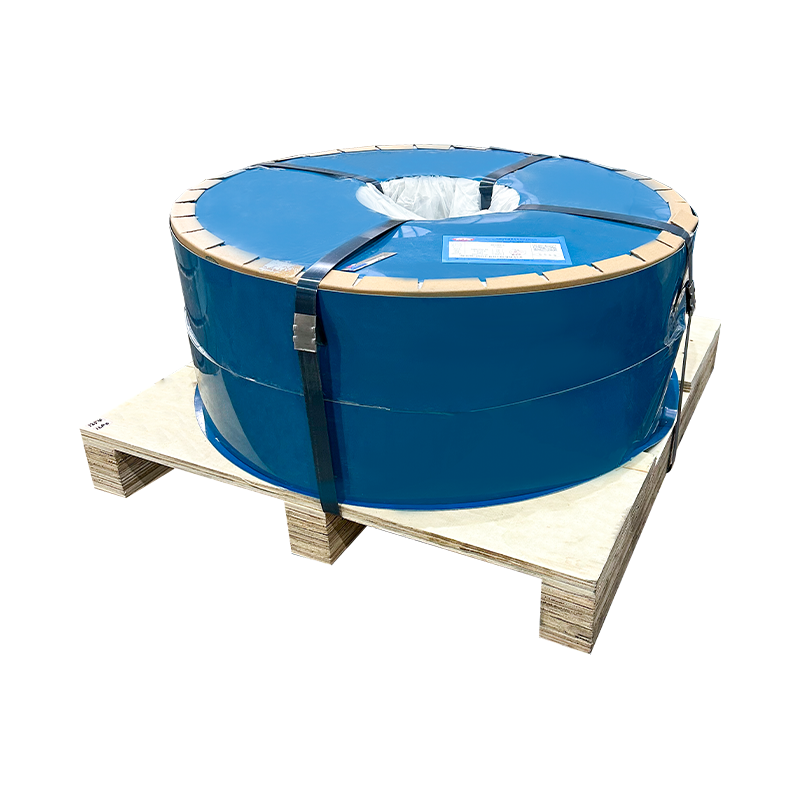
The endurance limit of 301 stainless steel in the cold-worked condition — the stress amplitude below which fatigue failure does not occur within a defined number of cycles, typically 10⁷ to 10⁸ cycles — is approximately 40 to 50% of ultimate tensile strength. For 1/2 hard 301 strip with a tensile strength of 1,100 MPa, this translates to an endurance limit of approximately 440 to 550 MPa — a significant working stress range that makes 301 strip competitive with carbon spring steels in fatigue-limited designs while offering the corrosion resistance advantage that carbon steels cannot provide without coating.
Surface quality is the single most important factor in maximizing fatigue life of 301 spring strip. Surface defects — scratches, pits, seams, inclusions breaking the surface — act as stress concentrators that initiate fatigue cracks at stress levels well below the smooth-specimen endurance limit. Premium spring-quality 301 strip is supplied with a bright annealed or 2B surface finish and is inspected to surface defect standards that minimize the presence of any feature that could initiate premature fatigue failure. Specifying surface finish and surface quality requirements explicitly when sourcing 301 strip for high-cycle spring applications is as important as specifying temper and dimensional tolerances.
Corrosion Resistance of 301 Strip in Spring Service Environments
The corrosion resistance of 301 stainless steel strip is one of the two primary reasons it is preferred over carbon spring steels in many spring applications — the other being the absence of a required post-forming heat treatment. In the annealed condition, 301 offers corrosion resistance comparable to 304 stainless steel, with a passive chromium oxide film that protects the surface from oxidation and attack by mild acids, alkalis, and atmospheric moisture. In the cold-worked condition, some reduction in corrosion resistance occurs in the areas where strain-induced martensite has formed, because martensite is slightly more susceptible to corrosion than austenite, and the internal stresses associated with the transformed zones can promote stress corrosion cracking (SCC) in specific aggressive environments.
For most spring service environments — atmospheric exposure, contact with mild cleaning solutions, indoor industrial environments, food contact applications, and electronic assemblies — 301 stainless steel spring strip provides fully adequate corrosion protection without supplementary coating. In highly aggressive environments — chloride-rich marine exposure, contact with strong reducing acids, or high-temperature oxidizing conditions — the corrosion resistance of 301 may be insufficient, and alternative materials such as 316 stainless steel, Hastelloy grades, or 17-7 PH in the precipitation-hardened condition should be evaluated. The stress corrosion cracking susceptibility of cold-worked 301 in chloride environments at elevated temperatures is a specific concern that should be addressed through material testing or literature review before specifying 301 strip for springs operating in warm, chloride-containing media.
Forming 301 Stainless Steel Strip Into Springs: Key Process Considerations
The forming of 301 strip into spring components requires attention to several process-specific factors that differ from forming softer stainless grades or carbon steels. These considerations affect tooling design, press setup, and the quality of the finished spring component.
Springback Compensation
High-strength cold-worked 301 strip exhibits substantial springback when bent or formed — the elastic recovery that occurs when forming pressure is released. The springback angle increases with yield strength, meaning that full-hard 301 springback significantly more per degree of bend than 1/4 hard material. Tooling for 301 spring strip forming must compensate for this springback by overbending to a degree determined by the material temper, bend radius, and thickness — typically requiring 10 to 30% additional bend angle beyond the target finished angle. Failure to account for springback results in springs with incorrect geometry and out-of-specification load characteristics. Empirical springback data from trial bends on the actual strip lot being processed is more reliable than theoretical calculations for setting up high-precision spring forming operations.
Minimum Bend Radius Requirements
The minimum bend radius achievable without cracking in 301 strip is a direct function of temper — decreasing ductility with increasing cold work means that harder tempers require larger minimum bend radii. As a general guideline, 1/4 hard 301 can be bent to a radius of approximately 0.5 times strip thickness (0.5T) in the transverse direction without cracking; 1/2 hard requires approximately 1.0T; 3/4 hard approximately 2.0T; and full-hard approximately 3.0T to 4.0T. Bending parallel to the rolling direction (longitudinal bending) typically requires 50 to 100% larger radii than transverse bending for the same temper, because the rolling texture of the strip makes it more prone to cracking when bent along the direction of elongation. Spring designs that incorporate tight bend radii should be validated against the minimum bend radius capability of the specified temper before committing to production tooling.
Industry Applications Where 301 Stainless Steel Spring Strip Is the Standard Specification
The combination of properties offered by 301 stainless steel strip has made it the default spring material specification across a wide range of industries and application types. Understanding where 301 is most commonly applied provides useful context for spring designers evaluating material options for new designs.
- Electronics and electrical components: Battery contacts, connector springs, EMI shielding clips, switch actuators, and card ejector springs in consumer electronics, telecommunications equipment, and industrial control systems are among the highest-volume applications for 301 spring strip. The combination of electrical conductivity adequate for contact applications, corrosion resistance to atmospheric moisture, precise dimensional tolerances, and high elastic energy storage per unit volume makes 301 strip indispensable in this sector.
- Automotive components: Seat belt retractor springs, fuel system clip springs, brake shoe return springs, and numerous under-hood spring clips use 301 strip for its combination of strength, corrosion resistance, and ability to withstand the elevated temperatures encountered in engine compartment environments. The magnetic properties of cold-worked 301 — which becomes partially magnetic after cold rolling due to martensite formation — can be either advantageous or a concern depending on the specific automotive application and must be checked against design requirements.
- Medical devices and instruments: Surgical instrument springs, retaining clips for disposable medical devices, and spring-loaded mechanisms in diagnostic equipment specify 301 strip for its cleanability, biocompatibility in non-implant applications, and sterilization compatibility with steam autoclaving and chemical disinfection. Medical applications typically require certified material with full traceability documentation and compliance with relevant standards such as ASTM A666 for 301 strip.
- Precision instruments and measurement devices: Diaphragm springs, Bourdon tube elements, and precision flat springs in pressure gauges, flow meters, and measurement instruments rely on 301 strip for consistent modulus of elasticity, predictable spring rate, and long-term dimensional stability. The high ratio of yield strength to elastic modulus in cold-worked 301 — which determines the elastic range over which a spring can operate without permanent set — is particularly valued in precision instrument spring design.
- Consumer goods and hardware: Clothing clips, binder clips, pen clip springs, buckle mechanisms, and safety pin springs represent high-volume consumer goods applications where 301 strip's combination of strength, corrosion resistance, and cost-effectiveness at commercial scale makes it the dominant material specification. These applications typically use 1/4 hard to 1/2 hard temper with standard commercial tolerances, representing the largest volume segment of the 301 spring strip market by tonnage.
Sourcing and Specifying 301 Stainless Steel Strip for Spring Production
When sourcing 301 stainless steel strip for spring production, the specification document should address a comprehensive set of parameters that together define the material's fitness for purpose. Relying on a grade designation alone — "301 stainless steel, 1/2 hard" — leaves significant ambiguity in surface finish, dimensional tolerances, edge condition, and test certification requirements that can result in incoming material that is technically within the ASTM A666 or equivalent standard but unsuitable for the specific spring manufacturing process being used.
Key specification elements for spring-quality 301 strip procurement include: thickness tolerance (typically ±0.005 mm to ±0.013 mm for precision spring stock, tighter than standard commercial tolerances), width tolerance and edge condition (slit edge versus mill edge, with slit edge preferred for consistent width in progressive die stamping), surface finish (2B or bright annealed for maximum fatigue resistance and corrosion performance), mechanical property requirements including minimum tensile strength, minimum yield strength, and maximum hardness per ASTM A666 or equivalent, and certification requirements including chemical composition certification, mechanical test certification, and — where required for medical or aerospace applications — full material traceability to melt heat and processing records. Engaging directly with precision cold-rolling strip mills or their qualified distributors, rather than sourcing through general stainless steel stockists, typically yields more consistent material quality and more reliable compliance documentation for demanding spring production applications.
 Previous


